
Difference Between Munakka and Kishmish for Better Health
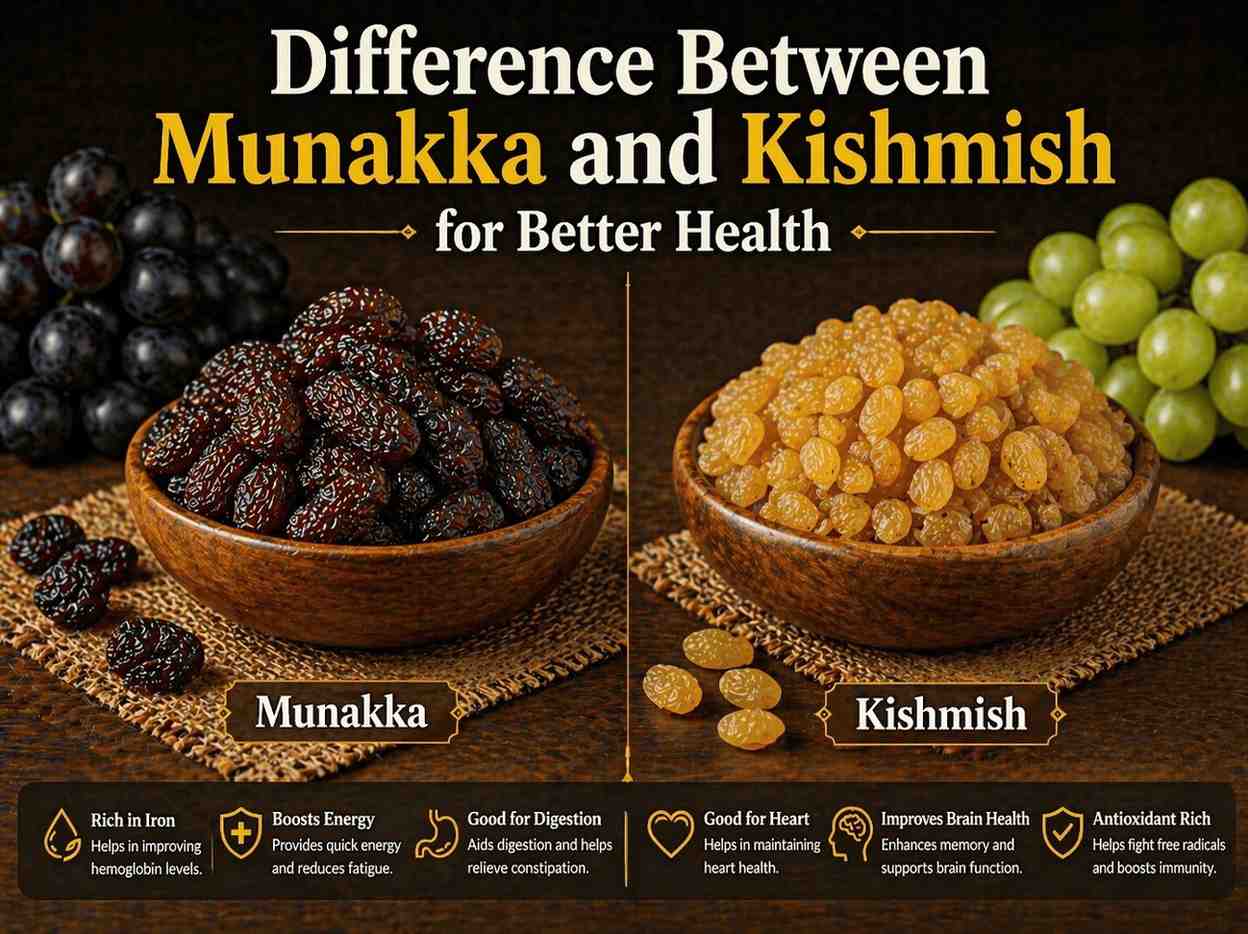
When it comes to dry fruits, many people think munakka and kishmish are the same, but they are actually different in many ways. Both are dried grapes, but they differ in size, taste, seeds, and health benefits.
Munakka is usually bigger, darker, and sometimes contains seeds, while kishmish is smaller, lighter in colour, and seedless. Both are rich in energy and nutrients, but munakka is often used for medicinal purposes, while kishmish is commonly eaten as a daily snack.
Let’s understand the difference between munakka and kishmish simply and clearly.
What is Munakka?
- Munakka is a large, sun-dried raisin made from grapes (Vitis vinifera), usually brown or dark in colour, and may contain seeds.
- It is known for its high nutritional value, natural sweetness, and important role in Ayurveda.
- Munakka helps improve digestion, increase iron levels, and provide quick energy to the body, and it is commonly soaked in water before eating for better digestion.
What is Kishmish?
- Kishmish, also called raisins, are dried grapes that are naturally sweet and full of energy, fiber, and nutrients.
- They are made by drying grapes in the sun or using machines, which gives them a soft and chewy texture.
- Kishmish comes in different types like green, golden, and black, and is commonly eaten as a snack or added to food.
Difference Between Munakka and Kishmish
A simple comparison explaining the difference between munakka and kishmish in size, taste, seeds, nutrition, and health benefits.
|
|
|
|
|
|
|
|
|
|
|
|
|
|
|
|
|
|
|
|
|
|
|
|
|
|
|
|
|
|
|
|
|
|
|
|
|
|
|
|
Nutritional Comparison of Kishmish and Munakka
A simple comparison of the nutritional values of kishmish and munakka, including calories, fiber, iron, potassium, and antioxidants.
|
|
|
|
|
|
|
|
|
|
|
|
|
|
|
|
|
|
|
|
|
|
|
|
|
|
|
|
|
|
Note- These nutritional values are taken from Internet sources.
Health Benefits of Munakka
- Munakka has high fiber, so it helps clean the stomach and reduces constipation.
- Munakka is rich in iron, so it helps increase hemoglobin and is useful for people with weakness or anemia.
- Munakka gives slow and steady energy, so it keeps you active for a longer time.
- It is commonly used in home remedies to reduce cough, cold, and throat irritation.
- Munakka contains minerals that help keep bones strong and healthy.
- Munakka has antioxidants that help repair body cells and improve skin health.
- It is rich in antioxidants that protect the body from damage and improve immunity.
Health Benefits of Munakka
- Kishmish also has fiber, which helps in smooth digestion and keeps the stomach light.
- It also contains iron, which helps support normal blood levels.
- Kishmish gives quick energy, so it is good when you feel tired suddenly.
- It is not mainly used for breathing problems, but it still supports general health.
- Kishmish has calcium and helps in supporting bone strength.
- Kishmish also has antioxidants that help keep skin fresh and healthy.
- It also helps protect the body and supports overall immunity.
Conclusion
Understanding the difference between munakka and kishmish helps you choose the right option for your health. While both are nutritious and beneficial, munakka is better for medicinal and digestive benefits, and kishmish is ideal for daily snacking and quick energy.
Looking for export-quality kismish (raisins) with perfect color, high purity, and complete safety? At NR Farm Product, we use advanced AI-based color sorting technology to ensure every raisin is uniform, clean, and free from contamination. This modern processing system helps us deliver premium-grade raisins that meet strict international standards, making them ideal for global importers and bulk buyers.
Get in touch with us at +91 8421304837 and email us admin@nrfarmproduct.com for reliable supply and best quality assurance.
Frequently Asked Questions
1. Who should not eat munakka?
People with diabetes or high blood sugar should eat munakka in limited quantities due to its natural sugar content.
2. What happens if we eat munakka daily?
Eating 5-7 munakka daily is healthy and helps improve digestion, energy, and iron levels.
3. What is the best time to eat munakka?
The best time is in the morning on an empty stomach after soaking overnight for better digestion.
4. Which vitamin is in kishmish?
Kishmish contains Vitamin C, B vitamins, and Vitamin K, which support overall health.