
9 Key Factors Importers Should Check Before Buying Raisins
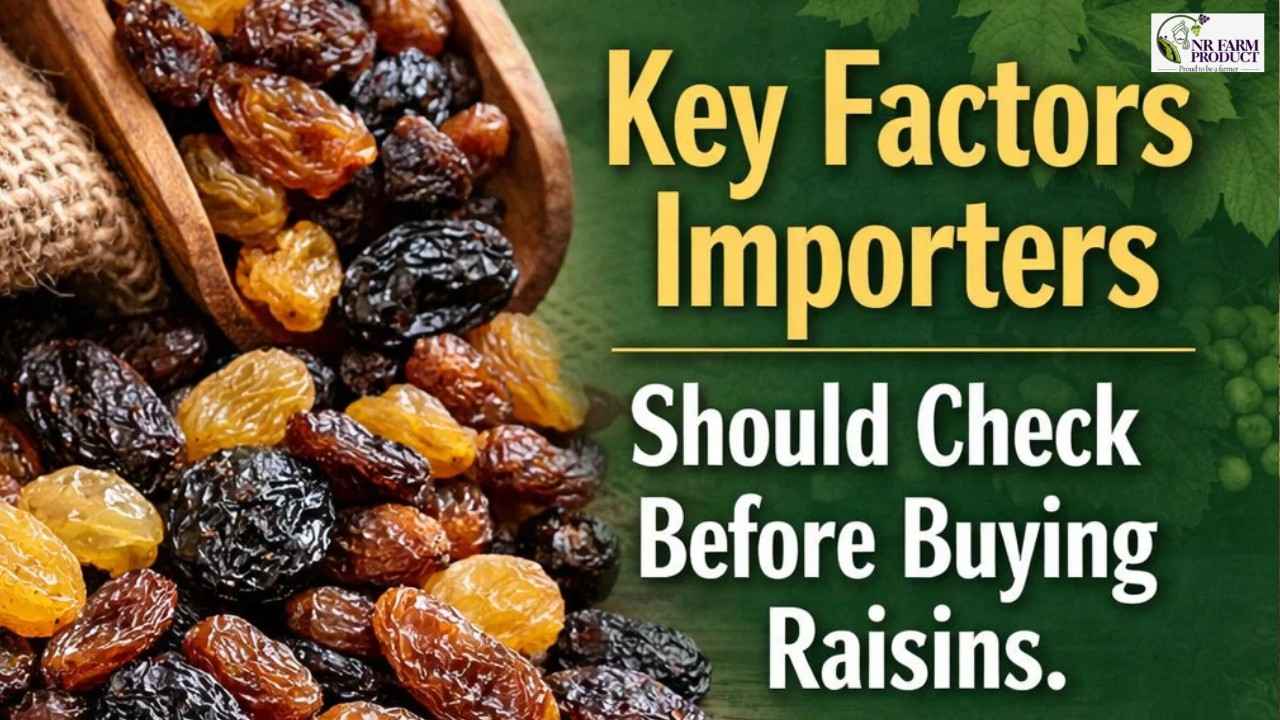
In the global marketplace, demand for high-quality raisins continues to rise; therefore, importers now require clean, safe, and consistent products that comply with rigorous quality and food safety regulations.
Unfortunately, selecting the right type of raisins can be challenging for importers, as small variations can significantly affect quality and moisture content, leading to product rejection, financial loss, and potential harm to the importer’s business reputation.
Hence, it is essential that importers fully understand the factors they must verify before purchasing bulk raisins, so they can ensure improved quality, easier importation, and long-term relationships with suppliers.
Why are Quality Checks Important in Raisin Imports
Before we look at the factors, let's understand why checking quality raisin parameters is so important.
Impact on Your Business
Bad raisins damage your reputation. If you sell poor-quality raisins to food manufacturers or retailers, they won't buy from you again. Your customers talk. Word spreads fast in the business world. One bad shipment can cost you many future orders.
Risk of Rejection and Financial Loss
Many shipments get rejected at customs. Why? Because they don't meet import standards. When customs rejects a shipment, you lose the entire shipment cost, the shipping cost, and the sale. That's thousands of dollars gone. One rejection can ruin a small business.
Building Long-Term Business Relationships
Good suppliers deliver consistent quality every time. That trust builds business growth. You can rely on them for bulk orders, flexible terms, and fair pricing. A trusted supplier becomes your partner, not just a vendor.
9 Key Factors Importers Should Check Before Buying Raisins
Before placing a bulk order, importers must check several important factors to ensure the raisins meet quality, safety, and market requirements. These checks help reduce risk, avoid rejection, and ensure consistent supply.
1. Quality & Appearance
The first thing to check is how the raisins look.
Check the color:
All raisins should have the same color. If some are black and some are brown, that's bad. It means they are of mixed quality. Ask the supplier: "Are all the raisins the same color?"
Check the size:
All raisins should be the same size. Not small. Not big. All the same. Different sizes mean different quality levels. Big raisins are good. Small raisins might be bad or old.
Check for Dirt and Broken Pieces:
Look at the raisins carefully. Do you see dust? Do you see stems? Do you see broken pieces? Good raisins are clean. They have no dirt. They have no broken pieces. They are ready to sell.
2. Variety Selection Based on Market Needs
There are 3 main types of raisins. You need to buy the right kind for your customers.
Kishmish Raisins
Kishmish are small, sweet, and soft. People eat them directly as a snack. They are also used in sweets and desserts. If your customers buy raisins to eat, Kishmish is the right choice.
Black Raisins
Black raisins are big and dark. Food companies use them in cereals, cookies, and snacks. They are used in baking too. If you sell to food factories or bakeries, buy Black raisins.
Brown Raisins
Brown raisins are medium-sized. They have a different taste. Some food companies prefer them for special products.
A good supplier sells all three types and can switch between them based on your market demands.
3. Moisture Content
Moisture means water. Raisins have water inside them. The amount of water matters a lot.
Ideal Moisture Level
Good raisins have 15-18% water inside. That's the perfect amount. If you have 100 kg of raisins, 15-18 kg is water. The rest is the raisin itself.
Problems with High Moisture
If raisins have more than 18% water:
- They get moldy fast
- They smell bad
- They rot during shipping
- Your customers receive spoiled raisins
- You lose money
Problems with Low Moisture
If raisins have less than 15% water:
- They become hard and dry
- They are difficult to eat
- They don't taste good
- Your customers don't like them
How to Check
Ask the supplier for a moisture test report. A good supplier has this report. It shows exactly how much water the raisins contain. If the number is 15-18%, it's good.
4. Food Safety & Lab Testing
You must check if the raisins are safe to eat. Lab testing is the only way to know.
Why Lab Tests Matter
Bad raisins can make people sick. Lab tests prevent this problem. They prove the raisins are safe.
The 3 Most Important Tests
- Pesticide Residue Report: Checks if raisins have poison from farming chemicals
- Aflatoxin Testing: Checks for dangerous mold that can grow during storage
- Microbial Safety Checks: Tests for harmful bacteria and fungi
Always ask for all three test reports before buying.
5. Type of Processing (Natural vs Treated)
There are two types of processing:
1. Natural
2. Treated.
Let's see the comparison table here:
Natural vs Treated
|
|
|
|
|
|
|
|
|
|
|
|
|
|
|
|
|
|
|
|
|
|
|
|
Natural raisins are better because they have no chemicals. Global markets prefer natural sun-dried raisins. Customers will pay more for natural raisins.
6. Certifications & Compliance
Certifications prove the supplier is honest and follows the rules.
The 4 Most Important Certifications
- APEDA Registration: A government organization that allows suppliers to export
- FSSAI License: Checks food safety and factory cleanliness
- HACCP Certification: Proves they have strict quality control systems
- ISO Certification: Shows they follow international quality rules
Always ask for copies of all certifications. Check the dates. Are they current or expired?
7. Packaging Standards
Good packaging keeps raisins fresh during shipping. Bad packaging ruins them.
What to Check
- Food-grade materials that are safe for food
- Moisture-proof containers that stop water damage
- Export-grade cartons that are strong and professional
- Clear labeling with weight, dates, and storage instructions
Quality packaging prevents spoilage and shows professionalism.
8. Documentation & Traceability
Papers prove where raisins came from and that they are safe.
Essential Documents
- Certificate of Analysis (COA): Lab test results for safety
- Phytosanitary Certificate: Proves raisins are free from pests
- Invoice & Packing List: Shows what's in the shipment
- Country of Origin Certificate: Important for customs and taxes
Always collect all documents before the supplier ships your order.
9. Supplier Reliability
Reliability means you can trust the supplier. They do what they promise.
Signs of a Reliable Supplier
- More than 5 years of export experience
- Can provide client references from other importers
- Maintains the same quality every month
- Replies to questions within 24 hours
- Accepts flexible payment methods
Test supplier reliability by placing a small order first. Only after everything is perfect, place larger orders.
Common Mistakes Importers Should Avoid
Importers often face issues due to small but important mistakes during the buying process. Identifying and avoiding these mistakes can help ensure better quality, smooth imports, and fewer risks.
Choosing based on price only:
Low prices may indicate poor quality, leading to rejection or customer complaints.
Ignoring lab testing reports
Without proper test reports, there is no proof that the raisins meet safety standards.
Not verifying certifications
Missing checks for APEDA, FSSAI, or ISO can lead to dealing with non-compliant suppliers.
Poor communication with suppliers
Unclear requirements can cause issues in quality, packaging, and delivery.
Skipping product samples
Not checking samples before bulk orders increases the risk of receiving low-quality products.
How NR Farm Product Meets All These Factors
NR Farm products follow a strong quality control process to ensure raisins are clean, uniform, and export-ready. Advanced processing technologies, including AI-based sorting, help remove defective and contaminated raisins, ensuring consistent quality in every batch.
Each batch is tested in laboratories for important safety parameters like pesticide residue, aflatoxins, microbial contamination, and moisture levels. The company also holds required certifications, including APEDA, FSSAI, and international food safety standards.
NR Farm uses export-grade, moisture-proof packaging to maintain freshness during shipping. With reliable supply, proper documentation, and clear communication, they ensure smooth and consistent support for importers.
Conclusion
Buying quality raisins requires checking 9 critical factors before placing any order. From quality and certifications to variety selection and supplier reliability, each factor impacts your bottom line.
Don't buy from just any supplier. Don't skip lab tests. Don't ignore certifications. Good raisins are worth the effort. Your customers will appreciate quality. Your business will grow.
Choose a trusted supplier like NR Farm that meets all the checkboxes. Request samples today. Verify quality firsthand. Your success depends on choosing the right supplier partnership.
FAQs
1. What is the ideal moisture level for raisins?
The ideal moisture level is around 15–18% to prevent spoilage and maintain good texture.
2. How to check raisin quality before buying?
Check color, size, and cleanliness, and ask for lab reports to confirm safety and quality.
3. What certifications are important for raisin imports?
APEDA, FSSAI, ISO, and HACCP certifications are important for quality and compliance.
4. Are chemical-free raisins better?
Yes, many markets prefer chemical-free raisins, as they are more natural and safer for consumption.