
Raisins for Weight Loss: Why Health Food Brands Include Raisins
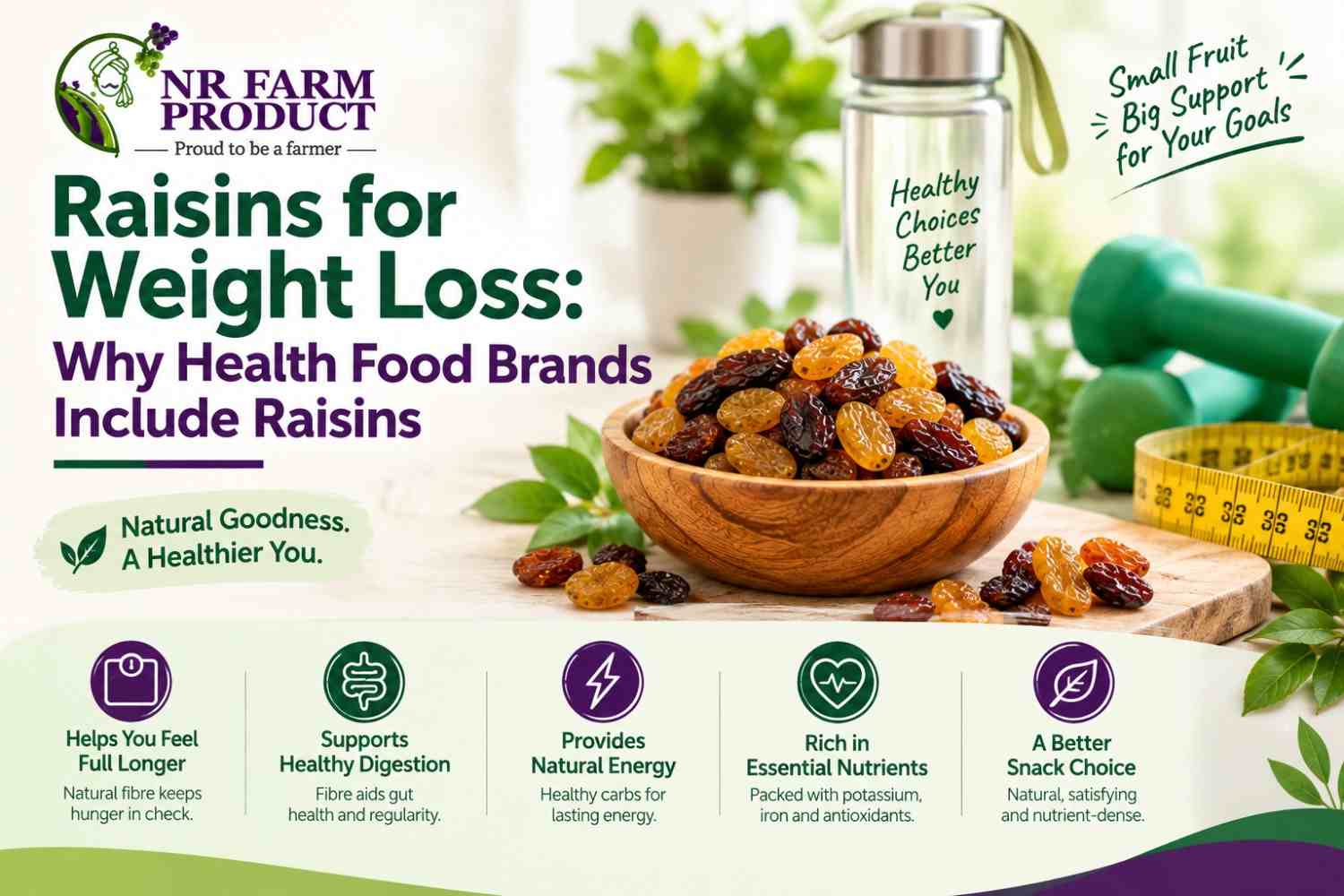
Raisins for weight loss can be part of a balanced eating plan when enjoyed in sensible portions. They provide dietary fibre, natural carbohydrates and other nutrients that can complement a varied diet. This makes raisins a useful ingredient for health food brands developing snack bars, trail mixes, cereals and other nutritious food products.
For food manufacturers, raisins also offer natural sweetness, a chewy texture and an easy way to add dried fruit to different recipes.
In this guide, we will learn the benefits of raisins, their role in weight management, and what to know about raisin water for weight loss. It also explains how food manufacturers use raisins in healthy food products.
Why Do Health Food Brands Include Raisins?
Raisins are made by drying grapes, which removes much of their water and concentrates their natural sugars and nutrients. They are easy to store, handle and add to many food products.
Health food brands commonly use raisins because they offer:
- Natural sweetness without needing raisins to be the only sweetening ingredient.
- Dietary fibre as part of a balanced diet.
- Carbohydrates that provide energy.
- Potassium and other nutrients naturally found in dried fruit.
- Chewy texture that works well with nuts, seeds and grains.
- Convenience for products designed for busy consumers.
Raisins can therefore be useful in products where brands want a dried-fruit ingredient rather than a highly processed sweet component.
Benefits of Raisins as Part of a Healthy Diet
The health benefits of raisins are mainly linked to their nutrient content. They provide carbohydrates, fibre and minerals, along with naturally occurring plant compounds.
Fibre
Raisins contain dietary fibre, which contributes to normal digestive health. Fibre can also add to the overall satiety of a meal or snack.
Natural Energy
Because raisins contain carbohydrates, they can provide a convenient source of energy. This makes them common in snack mixes and foods eaten before or after physical activity.
Minerals
Raisins provide minerals such as potassium and iron. The exact nutritional value depends on the product and serving size.
Easy to Add to Meals
Raisins can be added to porridge, yoghurt, cereals, salads, trail mixes and homemade snacks. This makes them an easy ingredient for people looking to include more dried fruit in their diet.
However, raisins are concentrated because most of the water present in fresh grapes has been removed. Portion size still matters.
Raisins for Weight Loss: What Should You Know?
When considering raisins for weight loss, the main point is portion control. Raisins can be included in a weight-management diet, but eating large amounts can add a significant number of calories because dried fruit is more concentrated than fresh fruit.
A practical approach is to use a measured portion rather than eating directly from a large packet.
Raisins can also be combined with foods such as:
- Nuts
- Seeds
- Oats
- Plain yoghurt
- Whole-grain cereals
- Fresh fruit
The overall meal or snack matters more than one ingredient. Weight management depends on total calorie intake, food choices, physical activity and individual needs.
Does Soaked Raisin Water Help With Weight Loss?
Soaked raisin water can be part of a balanced diet, but it does not directly burn body fat. Its natural sweetness may help satisfy sweet cravings, while its carbohydrates provide energy for daily activities.
What to know:
- Sweet cravings: Its mild sweetness may appeal to people looking for an alternative to sugary drinks.
- Energy: The natural sugars in raisins provide carbohydrates that the body uses for energy.
- Digestion: Eating the soaked raisins provides dietary fibre, which supports normal bowel movements.
- Calories and sugar: Raisins contain concentrated natural sugars and calories, so portion size matters.
- Fibre: Most of the fibre remains in the fruit rather than the soaking water. Eating the soaked raisins provides more fibre than drinking the water alone.
For weight management, focus on a balanced diet, suitable portions and regular physical activity rather than relying on raisin water as a weight-loss solution.
How Health Food Brands Use Raisins
Raisins fit into many products sold as convenient or healthy snack options.
Snack Bars
Food manufacturers can combine raisins with oats, nuts and seeds to create snack bars with a mix of textures and flavours.
Trail Mix
Raisins are commonly paired with nuts, seeds and other dried fruits. They add sweetness and a soft texture to an otherwise crunchy mix.
Breakfast Products
Raisins can be added to cereals, granola and oat-based products. Their natural sweetness can complement grains, nuts and seeds.
Yoghurt and Fruit Products
Raisins can also be used in fruit and nut mixes or as a topping ingredient, depending on the product formulation.
For brands making health-focused products, the final nutritional profile still depends on all ingredients, serving size and added sugars.
How to Choose Raisins for Healthy Food Products
The right raisin depends on the finished product. A cereal manufacturer may need a different size or texture from a snack-bar producer.
Before placing a bulk order, manufacturers should compare the product specification with their recipe and processing method. Testing a sample can also show whether the raisins mix well, hold their texture and meet the finished product requirements.
For brands selling healthy food products, it is also important to check the complete nutrition profile rather than making claims based on raisins alone.
Conclusion
Raisins for weight loss should be viewed as part of a balanced diet, not as a food that directly causes weight loss. Their fibre, carbohydrates, minerals and natural sweetness make them useful in everyday foods when portion sizes are considered.
For health food brands and food manufacturers, raisins can be a practical ingredient for snack bars, cereals, trail mixes and other dried-fruit products. NR Farm Product supplies raisins for bulk food applications, with options based on variety, grade, size, packaging and order requirements.
If you are looking for raisins for your food products, contact us to discuss bulk quantities, product specifications and pricing.
Frequently Asked Questions
1. Can raisins reduce belly fat?
No. Raisins cannot specifically reduce belly fat. They can be part of a balanced diet, but reducing body fat depends on overall calorie intake, diet and physical activity.
2. Can we eat 20 raisins a day?
For many healthy adults, 20 raisins can fit into a balanced diet. However, raisins are calorie-dense, so portion size should match your overall diet and nutritional needs.
3. Which dry fruit is best to lose weight?
There is no single dry fruit proven to cause weight loss. Almonds, walnuts and raisins can all be included in sensible portions as part of a balanced diet.
4. What are the disadvantages of eating raisins?
Eating large amounts of raisins can add significant calories and natural sugar to the diet. They can also stick to teeth, so good oral hygiene is important after eating them.
5. When should you avoid raisins?
People with specific allergies, dietary restrictions or medical conditions should follow their healthcare professional's advice. Anyone advised to limit sugars or certain nutrients should check whether raisins fit their diet.