
Chemical-Free Raisins: How to Identify Truly Natural Raisins
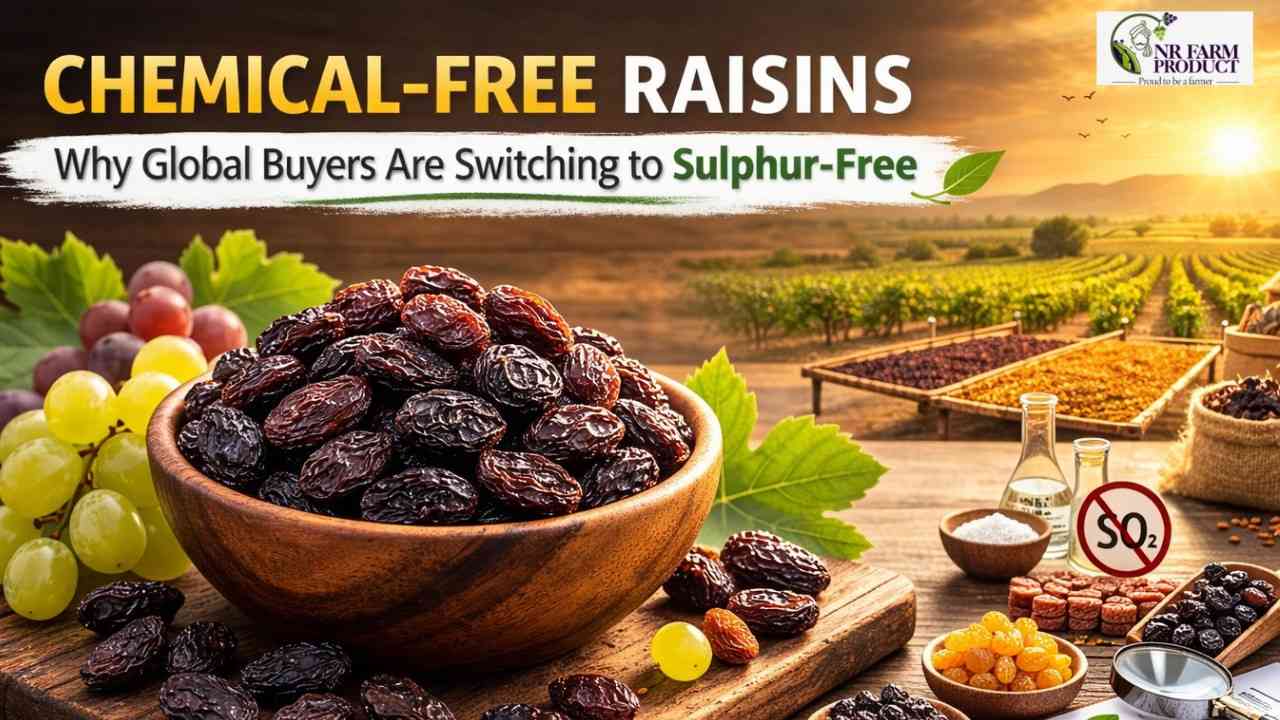
The global dried fruit industry is rapidly shifting toward clean-label and naturally processed products. Among these, chemical-free raisins are becoming the preferred choice for importers, retailers, and food manufacturers worldwide.
Consumers today are more aware of food additives, preservatives, and ingredient transparency than ever before. As a result, international buyers are increasingly choosing sulphur-free raisins, organic raisins, and naturally dried raisins over conventionally treated products.
In this blog, you will learn what chemical-free raisins are, how they are processed, their benefits, and how to identify truly natural raisins before buying.
What Are Chemical-Free Raisins?
Chemical-free raisins are raisins processed without sulphur dioxide (SO₂), artificial preservatives, or chemical treatments. These are naturally sun-dried raisins or shade-dried to preserve their original nutritional value and natural appearance.
Unlike conventional golden raisins, which are treated with sulphur dioxide to maintain a bright color, natural raisins develop a darker brown or black shade during drying. Their appearance may look less uniform, but they are considered a cleaner and more natural product.
This makes them highly suitable for health-focused brands, organic food companies, natural snack manufacturers, and clean-label product lines.
Chemicals Commonly Used in Raisin Processing
Some commercial raisins may contain additives or treatments used during processing and storage.
Sulphur Dioxide
This is commonly used to preserve colour and prevent darkening in lighter raisin varieties.
Preservatives
Certain preservatives may be added to improve shelf life during transportation and long-term storage.
Oil Coating
Some raisins are coated with food-grade oils to improve shine and texture.
Not all treated raisins are harmful, but many consumers now prefer raisins without chemicals and minimally processed products for a more natural eating experience.
Benefits of Chemical-Free Raisins
Choosing chemical-free raisins can offer several advantages for consumers who prefer natural food products.
Natural Taste and Texture
Naturally processed varieties like brown raisins and Sonaka raisins are widely appreciated for their rich flavor, chewy texture, and traditional drying characteristics.
Minimal Processing
Less processing helps preserve the raisin’s original characteristics and natural appearance.
Suitable for Health-Conscious Consumers
Many people prefer healthy raisins and natural dry grapes as part of a clean eating routine.
Nutritional Value
Raisins naturally contain:
- Dietary fibre
- Iron
- Potassium
- Antioxidants
- Natural fruit sugars
These nutrients make varieties like premium black raisins, Nashik golden raisins, and brown raisins popular choices for snacks, bakery products, cereals, and daily consumption.
How to Identify Truly Natural Raisins
Many buyers find it difficult to differentiate between natural and chemically processed raisins. The table below can help identify common differences.
|
|
|
|
|
|
|
|
|
|
|
|
|
|
|
|
|
|
Natural raisins, such as Malayar raisins and premium black raisins, usually have a darker color, natural wrinkles, and a less glossy texture compared to chemically treated varieties.
Chemical-Free Raisins vs Organic Raisins
People often confuse chemical-free raisins with organic raisins, but both are different in terms of production and certification.
|
|
|
|
|
|
|
|
|
|
|
|
|
|
|
Both options are commonly chosen by consumers looking for natural and premium dry fruit products.
Why Naturally Sun-Dried Raisins Are Preferred
Many consumers prefer naturally dried raisins because they are produced using traditional drying methods with minimal intervention.
Benefits of naturally sun-dried varieties such as Malayar raisins, brown raisins, and
Thomson raisins include the following:
- More authentic flavour
- Natural texture
- Traditional processing methods
- Reduced artificial treatment
As demand for clean-label foods increases, sun-dried raisins and minimally processed dry fruits continue gaining popularity in domestic and export markets.
Why Quality Matters When Buying Raisins
The quality of raisins depends on several important factors, including:
- Grape selection
- Drying methods
- Hygiene standards
- Storage practices
- Processing quality
Low-quality raisins may contain excess moisture, have an uneven texture, or have poor storage stability. Choosing trusted suppliers helps ensure better consistency, food safety, and premium product quality.
Consumers and B2B buyers should always look for suppliers that maintain proper sourcing and processing standards for healthy dry fruits and export-quality raisins.
Why Choose NR Farm Raisins
At NR Farm Product, quality and consistency are highly valued throughout the sourcing and processing stages. The company focuses on delivering premium raisin varieties for domestic and international markets.
NR Farm works with carefully selected farms and follows hygienic handling practices to maintain product quality, natural taste, and freshness. The company offers multiple raisin varieties suitable for wholesalers, distributors, retailers, and bulk buyers.
With a strong focus on quality standards, reliable supply, and customer satisfaction, NR Farm continues to serve the growing demand for premium raisins in global markets.
Conclusion
The growing demand for natural and minimally processed foods has increased interest in chemical-free raisins and other clean-label dry fruits. Consumers today are paying closer attention to how raisins are processed, stored, and supplied before making a purchase decision.
Understanding the difference between natural and chemically processed raisins can help buyers choose better-quality products for daily consumption. Whether for personal use or bulk purchasing, selecting trusted suppliers and naturally processed raisins is important for ensuring quality, safety, and authenticity.
FAQs
1. Are raisins treated with chemicals?
Some commercial raisins may use preservatives or sulphur treatment during processing and storage.
2. How can I identify natural raisins?
Natural raisins usually have a darker colour, natural wrinkles, and a less glossy texture.
3. Are black raisins naturally processed?
Many black raisins are naturally sun-dried, although processing methods may vary between manufacturers.
4. Are natural raisins healthier?
Many consumers prefer minimally processed raisins because they are closer to their natural form.
5. Which raisins are best for daily consumption?
Good-quality, naturally processed raisins are commonly preferred for daily eating and snacking