
Raisin Dry Fruit Benefits and Commercial Uses Across Industries
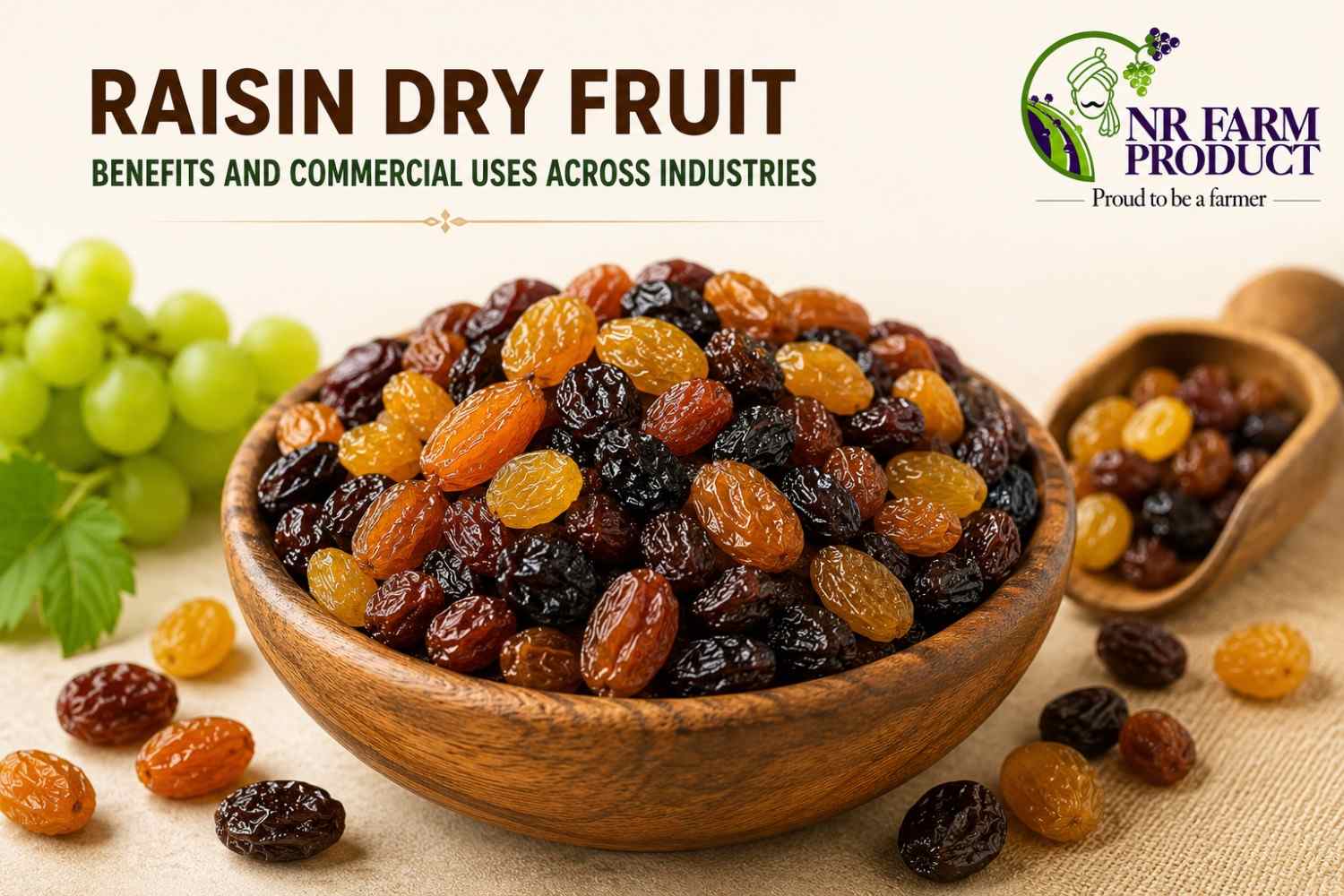
Raisins are dried grapes that are widely used as both a food and a commercial ingredient. Raisin dry fruit benefits include fibre, natural carbohydrates, potassium, iron, and plant compounds. They are also easy to store and use, which makes them suitable for snacks, cooking, baking, and food manufacturing.
In this guide, we will learn the main raisin benefits, nutritional value, everyday uses, and commercial applications across different food industries.
Raisin Dry Fruit Benefits
Raisins can be a useful part of a balanced diet when eaten in suitable portions. Their nutrients and natural sweetness make them a convenient addition to everyday meals.
Here are some benefits of raisins as a dry fruit:
Supports Digestive Health
Raisins contain dietary fibre, which supports normal digestion and regular bowel movements.
Adding fibre-rich foods to meals can help maintain a balanced diet.
Provides Natural Energy
The natural carbohydrates and sugars in raisins provide a convenient source of energy.
This makes them a practical snack between meals or during daily activities.
Supports Heart Health
Raisins provide potassium and fibre, which are useful nutrients in a balanced diet.
Including them alongside other nutrient-rich foods can contribute to an overall heart-friendly eating pattern.
Provides Iron
Raisins contain iron, which the body uses to make haemoglobin and transport oxygen.
They can therefore contribute to daily iron intake when included as part of a varied diet.
May Support Skin Health
Raisins contain plant compounds with antioxidant properties.
These compounds contribute to overall nutrition and can form part of a diet that supports normal skin health.
Raisins and Diabetes
Raisins contain concentrated natural sugars because most of the water is removed during drying.
People with diabetes should consider portion size and total carbohydrate intake when including raisins in their diet.
Benefits for Men
Raisins provide carbohydrates, fibre, potassium, and iron that can contribute to normal nutrient intake.
They can be included in meals or snacks as part of a varied diet.
Benefits for Women
Raisins provide several nutrients, including fibre, potassium, iron, and carbohydrates.
Their iron content can contribute to overall dietary iron intake.
Benefits for Children
In suitable portions, raisins can provide children with carbohydrates, fibre, and minerals.
As they are sticky and naturally sweet, moderate portions and good dental hygiene are important.
Raisins Nutritional Value
The raisins nutritional value comes from nutrients that remain after grapes are dried. Because much of the water is removed, raisins contain more concentrated carbohydrates and natural sugars than fresh grapes.
|
|
|
|
|
|
|
|
|
|
|
|
|
|
|
|
|
|
|
|
|
The nutritional profile can vary according to the grape variety, growing conditions, and processing method.
How Can You Include Raisins in Your Daily Diet?
Raisins can be added to everyday foods without much preparation. They work well in both sweet and savoury recipes.
- Breakfast: Add them to oats, porridge, cereals, or muesli.
- Snacks: Eat a small portion with nuts or use them in trail mixes.
- Baking: Add them to bread, cakes, cookies, muffins, and pastries.
- Desserts: Use them in puddings, rice dishes, and fruit-based desserts.
- Savoury foods: Add them to selected rice dishes, salads, and cooked recipes for a mild sweet flavour.
- Homemade bars: Mix them with oats, nuts, seeds, or other dried fruits.
As raisins contain concentrated natural sugars, moderate portions are a sensible choice, particularly when they are eaten regularly.
Commercial Uses of Raisins Across Different Food Industries
Raisins are used across the food industry because different varieties offer different colours, sizes, flavours, and textures. Food manufacturers can select varieties based on the appearance and performance required in the final product.
Bakery Products
Thompson raisins, Malayar raisins, and brown raisins are suitable for products such as bread, cakes, cookies, muffins, buns, and pastries. Their sweet flavour and chewy texture work well in baked recipes, while whole or chopped raisins can be selected based on the product.
Breakfast Cereals and Granola
Golden raisins, green raisins, and Thompson raisins can add colour and variety to cereals, granola, muesli, and oat-based mixes. They pair well with grains, nuts, seeds, and other dried fruits.
Confectionery Products
Black raisins, golden raisins, and seedless raisins can be used in chocolates, sweets, fruit-and-nut mixes, and dessert products. Their colour and flavour can be selected to match the appearance and taste of the final product.
Snack Products
Green raisins, black raisins, and Sonaka raisins are suitable for trail mixes, nut mixes, cereal bars, and ready-to-eat snacks. They add a chewy element and can be combined with nuts, seeds, and other dried fruits.
Dairy and Dessert Products
Golden raisins and brown raisins can be added to ice cream, puddings, dessert cups, and sweet preparations. Chopped raisins may be useful where manufacturers need more even distribution throughout the product.
Fruit Mixes and Fillings
Thompson raisins, Malayar raisins, and seedless black raisins can be used in dried-fruit blends, bakery fillings, and dessert preparations. They can also be combined with dates, figs, apricots, and other dried fruits.
Sauces and Prepared Foods
Black raisins and brown raisins can be used in selected chutneys, sauces, stuffing mixes, and prepared foods. Their natural sweetness can balance spices and savoury flavours. Depending on the recipe, they may be used whole, chopped, or soaked before processing.
The right raisin variety depends on the final product, required appearance, texture, flavour, and processing needs.
Why Do Food Manufacturers Use Raisins?
Raisins offer food manufacturers a flexible ingredient that can be used across several product categories.
- Natural sweetness: Provides sweetness from naturally occurring sugars.
- Fruit flavour: Adds a recognisable dried-fruit taste.
- Chewy texture: Gives baked and snack products a different texture.
- Easy handling: Simple to store, measure, transport, and incorporate into recipes.
- Wide application: Suitable for bakery, cereals, confectionery, snacks, and desserts.
- Different specifications: Available in various varieties, sizes, grades, and colours.
Bulk Raisins Supplier and Exporter from India
NR Farm Product supplies bulk Indian raisins to food manufacturers, importers, wholesalers, and distributors. We offer different types of raisin varieties with cleaning, grading, sorting, and food-grade packaging.
We supply raisins to Vietnam, Dubai, Nigeria, Senegal, and other international markets. Our products are suitable for bakery, confectionery, cereals, snacks, and other food applications.
We focus on consistent quality, reliable supply, and export-ready packaging for buyers looking for raisins from India.
Conclusion
Raisin dry fruit benefits include fibre, natural carbohydrates, potassium, iron, and other useful plant compounds. Raisins are also convenient to store and easy to add to everyday meals, snacks, and recipes.
Their natural sweetness, fruit flavour, and chewy texture make them useful across bakery, cereals, confectionery, snacks, desserts, and other food products. Different raisin varieties can be selected according to the requirements of the final application.
Looking for bulk raisins from India? Contact NR Farm Product to discuss your requirements and order quantity.
FAQs
1. Is it good to eat dry raisins every day?
Yes, raisins can be eaten daily in moderate amounts as part of a balanced diet. They provide fibre, carbohydrates, potassium, and iron.
2. Which is the best time to eat raisins?
There is no fixed best time to eat raisins. They can be enjoyed with breakfast, as a snack, or as part of a meal.
3. What are the disadvantages of eating raisins?
Eating large amounts can increase sugar and calorie intake because raisins are concentrated dried fruit. Their sticky texture also makes good dental hygiene important.
4. Which raisin is better, black or green?
Both can be suitable depending on taste, colour, texture, and the intended use. Black raisins generally have a darker appearance, while green raisins have a lighter colour and flavour.
5. What happens if I eat soaked raisins every day?
Soaked raisins become softer and easier to eat while still providing fibre, carbohydrates, minerals, and plant compounds. Soaking does not remove their natural sugars, so moderate portions are still recommended.