
Supplying Black Raisins in West Africa: Market Trends & Buying Guide
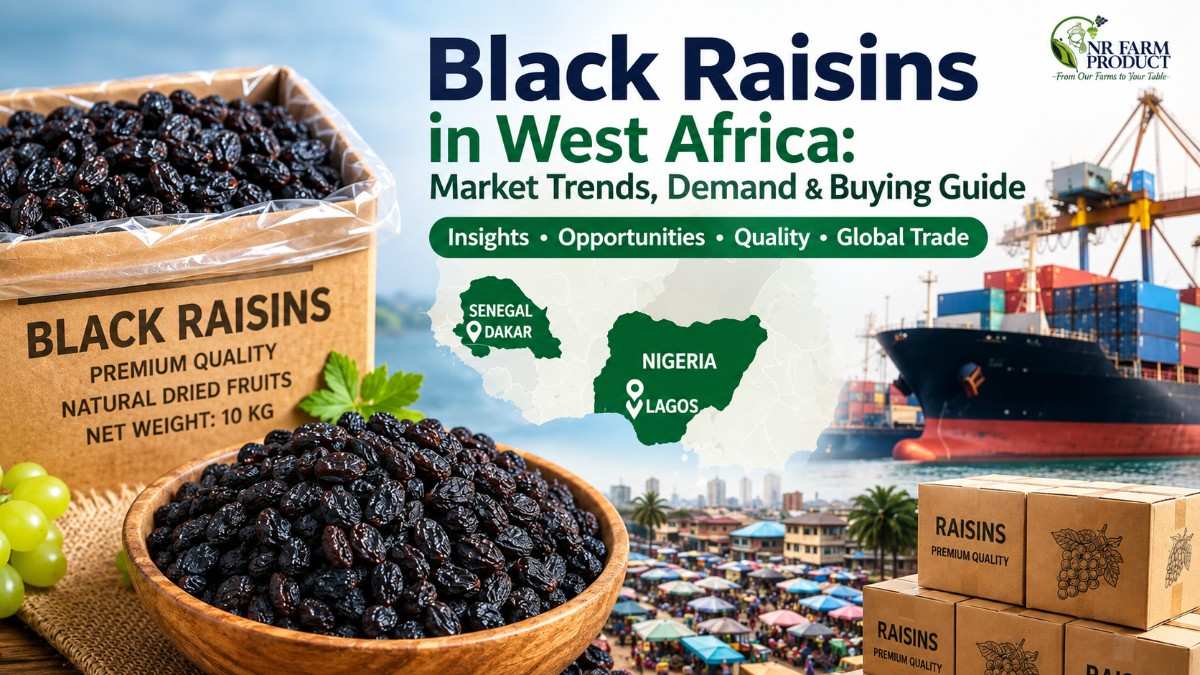
West African buyers increasingly source dried grapes for retail, bakery, food processing and wholesale distribution. Nigeria is a particularly relevant market for Indian raisin suppliers, with trade records showing shipments of black raisins and other Indian raisins into the country. Recent shipment records also include 20-tonne consignments of Indian raisins and 40,000 kg shipments described as dried raisins.
For importers, the opportunity is not simply about finding a low-cost product. The more useful question is whether the supplier can provide the required grade, packaging, documentation and shipment consistency for the destination market.
In this blog, we will learn about supplying black raisins in West Africa, key markets, import trends, quality checks and bulk sourcing options for African buyers.
Where Are Raisins Used in West African Markets?
Raisins are sold through wholesale and retail channels and are also used as food ingredients.
Common applications include:
- Bakery products and cakes
- Snack and dried-fruit mixes
- Cereals and breakfast foods
- Confectionery and desserts
- Packaged dried-fruit products
- Traditional food preparations
The market is not limited to one raisin variety. Brown, Golden, and Black raisins can serve different applications depending on colour, size, taste, texture and price.
Trade records for Ghana, for example, show imports of golden, brown, sultana and mixed raisins from several supplying countries. This indicates that buyers in the region source according to product type rather than treating all dried grapes as one category.
Black Raisins in Nigeria: What Do Trade Records Show?
Indian raisins for the Nigerian market are one of the more relevant destinations in West Africa.
Recent shipment data includes Indian consignments described as black raisins, Indian raisins, Malayar raisins and black seedless kishmish. The records also show commercial quantities ranging from smaller shipments to consignments of 20 metric tonnes and 40,000 kg.
This is useful for buyers because it shows that the Nigerian market already has a trading link with Indian raisin suppliers.
However, shipment records should not be treated as a complete measure of total Nigerian consumption. They show recorded trade activity, not the entire domestic market.
What About Senegal and Other West African Markets?
Senegal is another market worth considering when assessing regional dried-fruit opportunities.
At the broader trade level, international trade databases classify raisins under HS 080620, “dried grapes". This classification is useful when researching import values, supplying countries and trade flows. ITC Trade Map uses HS 080620 for dried grapes, while India's export classification separately identifies raisins under HS 08062010.
Beyond Nigeria and Senegal, Ghana and Côte d’Ivoire also show recorded raisin import activity. Volza's recent trade data lists hundreds of raisin-related shipments into Ghana and Côte d’Ivoire, although these figures cover different raisin categories and should not be interpreted as black-raisin-only demand.
This distinction matters: trade data can confirm import activity, but it cannot by itself prove that black raisins are the leading variety in every West African city.
What Should African Importers Check Before Buying?
A competitive quotation is only useful when the product specification is clear.
Before placing an order, buyers should confirm:
Product Grade
Ask for the exact grade, size and variety rather than requesting only “black raisins.”
A retailer selling packaged dried fruit may need a different specification from a bakery or food manufacturer.
Moisture
Moisture affects texture and storage performance. Normally, raisins are in a 12%–16% moisture range, but the final specification should always be agreed between buyer and supplier before shipment.
Cleaning and Sorting
For commercial use, ask how the product is cleaned, graded and sorted. Buyers should also request a representative sample before approving a large order.
Packaging
Long-distance shipments require packaging that protects the product from moisture and handling damage.
The right format depends on whether the product is intended for wholesale distribution, repacking or direct food manufacturing.
Shelf Life
Shelf life depends on the raisin specification, packaging and storage environment. Instead of relying on a generic figure, buyers should request the supplier's stated shelf life for the exact product being purchased.
Why Indian Raisins Are Relevant to West African Buyers
India has an established grape-growing and raisin-processing base. APEDA identifies Maharashtra as India's leading grape-producing state, accounting for more than 69% of national grape production in 2024–25.
Indian trade classification also specifically identifies raisins under HS 08062010, making the product straightforward to track through international trade databases.
For an importer, the practical advantage is access to multiple Indian raisin varieties rather than dependence on a single product specification.
How to Compare Raisin Suppliers
African wholesalers and importers should compare suppliers using the same product specification.
Check:
- Variety and grade
- Size and appearance
- Moisture specification
- Sample quality
- Packaging format
- Minimum order quantity
- Export documents
- Shipment terms
- Expected transit time
- Repeat-supply capacity
A supplier offering a lower price may not provide the same grade, packaging or documentation as another exporter. Comparing like-for-like specifications gives a more useful landed-cost comparison.
Buying Black Raisins in Bulk for West Africa
For importers planning regular supply, the first step should be a clear product specification rather than a general request for raisins.
State the required variety, grade, size, moisture range, packaging, quantity and destination. Then request a sample and commercial quotation based on those specifications.
NR Farm Product supplies black and other raisin varieties for bulk requirements. Buyers can discuss product specifications, packaging and shipment requirements before confirming an order.
Conclusion
The black raisins market in West Africa should be assessed through actual trade activity rather than broad claims about rising consumption.
Nigeria market already has documented imports of Indian black raisins and other raisin varieties, while Ghana and Côte d’Ivoire also show active raisin import flows.
For wholesalers and food businesses, the key sourcing factors remain straightforward: product specification, sample quality, packaging, documentation and dependable shipment terms.
For Indian exporters, this creates an opportunity to serve buyers who need clearly specified raisins for retail, bakery and food-processing applications across West African markets.
FAQs
1. Are black raisins imported into Nigeria?
Yes. Recent trade records show Nigerian imports of black raisins and other Indian raisin varieties, including commercial-volume shipments.
2. What is the HS code for raisins?
Raisins are classified under HS 080620, which covers dried grapes. India's trade classification identifies raisins under HS 08062010.
3. What should African buyers check before importing raisins?
Check the variety, grade, size, moisture, sample, packaging, documents, quantity and shipping terms before confirming an order.
4. Are black raisins and black kishmish the same?
They can refer to the same product category. Trade records from Nigeria use both “black raisins” and “raisin kishmish black seedless” in product descriptions.
5. Can Indian suppliers provide bulk raisins to West Africa?
Yes. Indian raisins are already recorded in Nigerian import shipments, including black raisins and other varieties.