
Dry Dates for Food Manufacturing: A Buyer’s Guide
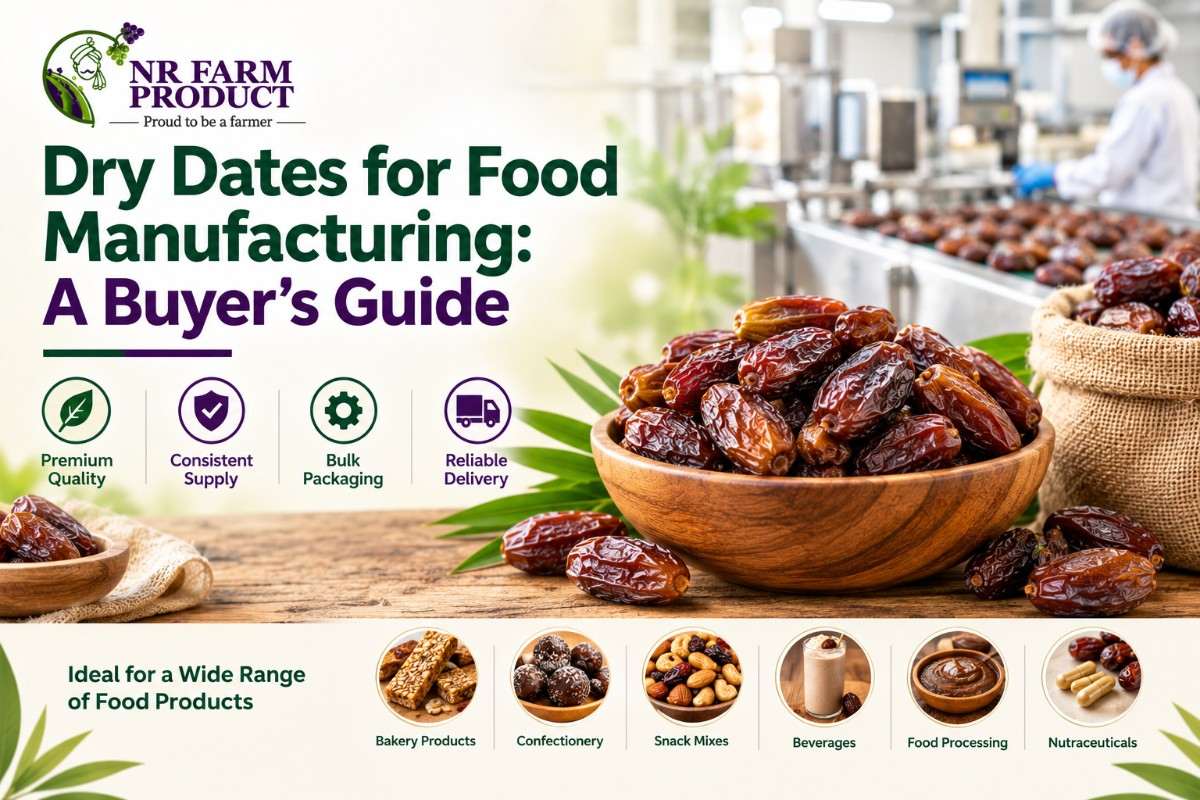
Have you ever wondered what makes certain granola bars, cookies, and snack mixes taste so naturally sweet and chewy? Often, the secret ingredient is dry dates.
Food makers use dry dates because they add natural flavor without needing lots of processed white sugar. But buying dry dates in big batches, also called wholesale buying takes careful planning. If a snack factory gets the wrong kind of date, the machines might jam, or the snacks might spoil too quickly.
In this blog, we will learn how to use dry dates for food manufacturing to make delicious and safe snacks. Check before buying and how to store them.
Why Food Manufacturers Use Dry Dates
Dry dates are used as a food ingredient because they offer natural sweetness, a chewy texture, and a distinct date flavor. They can be used whole, pitted, chopped, or processed depending on the product.
Common reasons manufacturers use dry dates include:
- Natural Sweetness: They bring a rich, caramel-like flavor while keeping snacks healthy.
- Good Binding: In energy bars, sticky dates act like edible glue, holding oats, nuts, and seeds together.
- Long Shelf Life: Because they do not have much water in them, they last a long time on grocery store shelves without going bad.
- Wide range of uses: They work well in fruit cakes, cookies, breakfast cereals, trail mixes, and healthy sweets.
What to Check When Buying Dry Dates in Bulk
Buying by price alone can create problems if the product does not match the manufacturing process. Before ordering, buyers should check several basic specifications.
1. Size and Shape
Not all snacks need the same type of date.
- Whole dates look nice in premium gift packs.
- Chopped or pitted dates are much better for factories because machines can mix them easily into cookie dough or cereal.
2. Moisture (How Dry They Are)
The amount of water inside a date matters a lot:
- If dates are too wet and sticky, they will clog up factory cutting machines.
- If they are properly dried, they stay fresh during shipping and long warehouse storage.
3. Cleanliness and Safety
Factories must make sure their food is safe. The best suppliers test their dates to ensure there is no dust, dirt, insects, or bad mold. Clean factories use special sorting machines and metal detectors to keep food pure.
4. Taste and Color Match
Every batch of snacks should taste and look the same. If the dates in one batch are too dark or too sweet, the final product might taste different, which customers will notice.
Dry Date Specifications for Different Food Products
The best dry dates depend on how they will be used.
|
|
|
|
|
|
|
|
|
|
|
|
|
|
|
|
|
|
|
|
|
|
|
|
How to Store Dry Dates for Long Periods
Knowing how to store dry dates properly helps maintain their texture, taste, and shelf life during bulk storage.
- Keep them cool and dry: Protect dates from heat and excess humidity.
- Use sealed packaging: Choose food-grade packaging that limits moisture exposure.
- Avoid sunlight and contamination: Store away from direct sunlight, chemicals, pests, and strong-smelling products.
- Keep the storage area clean: Maintain hygienic warehouse conditions.
- Follow FIFO: Use older stock before newer batches.
- Check regularly: Inspect dates for mold, insects, moisture, or changes in texture.
For long-term storage, follow the supplier’s recommended storage conditions and shelf-life instructions.
How to Evaluate a Dry Dates Supplier in India
A supplier should be evaluated on more than the quoted price. Procurement teams can compare suppliers using the following points:
- Product grade and specifications
- Available sizes and formats
- Sample quality
- Packaging options
- Minimum order quantity
- Bulk pricing
- Delivery timeline
- Product and batch documentation
- Relevant domestic certifications
- Ability to handle repeat orders
It is also useful to approve a sample before placing a large order. This allows the production team to check the dates against the actual recipe and processing method.
Questions to Ask Before Ordering Dry Dates
Before confirming a bulk purchase, ask the supplier:
- What grades and sizes are available?
- What is the product moisture specification?
- Are the dates whole, pitted, or chopped?
- What packaging options are available?
- What is the minimum order quantity?
- What product documents are provided?
- What is the expected delivery time?
- Can I review a sample before placing the bulk order?
These questions can help procurement teams avoid buying a product that does not fit their production needs.
Final Checklist for Dry Dates Procurement
Use this checklist before confirming your order:
- Application: Match the dates to the final food product.
- Specification: Confirm size, grade, texture, and moisture.
- Quality: Check cleanliness, appearance, and flavor.
- Format: Choose whole, pitted, chopped, or processed dates based on production needs.
- Packaging: Confirm pack size and protection during transport.
- Documentation: Review relevant product and certification documents.
- Supply: Confirm quantity, price, and delivery schedule.
- Sample: Test the product before placing a large order.
Source Dry Dates for Food Manufacturing
For food manufacturers and wholesale buyers in India, choosing the right dry dates supplier starts with matching the product to the intended application. Product specifications, packaging, quantity, and delivery terms should be discussed before confirming a bulk order.
NR Farm Product supplies dry dates for the Indian market. Contact us to discuss product requirements, bulk quantities, packaging options, and pricing.
Conclusion
Choosing the right dry dates supplier in Maharashtra is an important step for food manufacturers and bulk buyers. When sourcing dry dates for food manufacturing, compare size, grade, moisture, texture, cleanliness, format, packaging, documents, and delivery terms.
A good supplier should provide clear product specs and samples. This lets manufacturers test the dates before placing a large order. For businesses that buy dry dates in bulk, it helps to work with a supplier who understands food manufacturing needs. This can make purchasing easier. It can also make supply more reliable.
Frequently Asked Questions
1. What are dry dates used for in food manufacturing?
Dry dates are used in bakery products, snack bars, trail mixes, cereals, confectionery, fillings, and other processed foods. The required date format depends on the application.
2. How do manufacturers choose dry dates?
Manufacturers should compare size, grade, moisture, texture, cleanliness, flavor, format, packaging, and supplier documentation before ordering.
3. What moisture level is suitable for dry dates?
There is no single moisture level that suits every food product. Manufacturers should choose a specification based on the recipe, processing method, storage conditions, and supplier's product data.
4. What should buyers check before buying dry dates in bulk?
Buyers should check the product specification, sample quality, packaging, minimum order quantity, documentation, price, and delivery schedule.
5. How should dry dates be stored?
Dry dates should be stored in a clean, dry place and protected from excess moisture, heat, contamination, and poor handling.