
Raisins vs Sultanas: Which Is Better for Food Manufacturers and Importers?
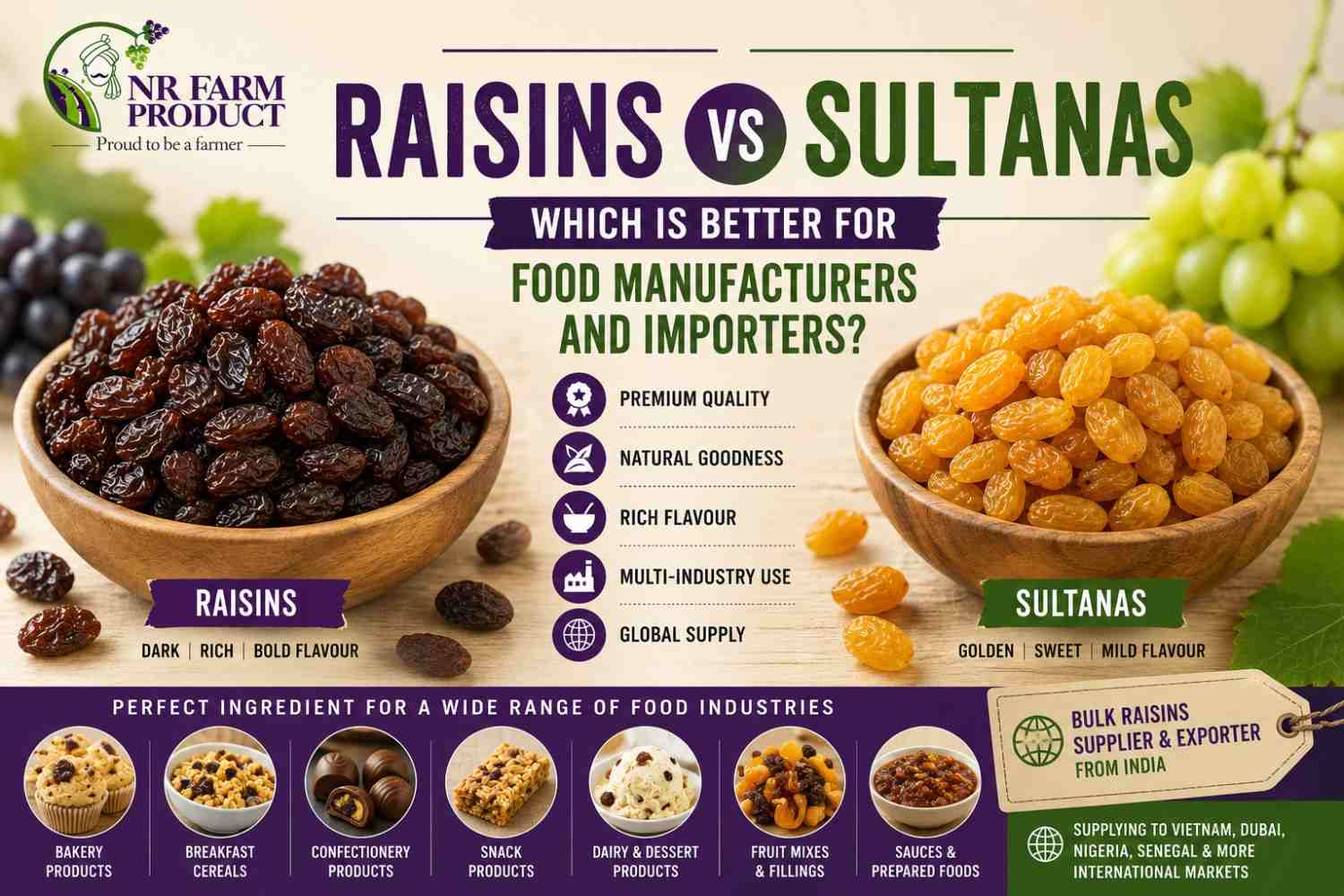
Raisins and sultanas are both dried grapes, but they can differ in colour, flavour, texture, variety and processing. These differences can affect how they work in bakery products, cereals, snacks and confectionery. The right choice depends on your product and required quality.
In this guide, you will learn about raisins vs sultanas key differences, production methods, nutrition, food applications and the key points to check before placing a bulk order.
What Are Raisins?
Raisins are sun-dried or machine-dehydrated grapes, typically made from seedless varieties. As the grapes lose water, they become darker, sweeter and softer. Their size, colour and taste depend on the grape variety and drying process.
Different types of raisins are commonly used in bread, cakes, cookies, cereals, snack bars, confectionery and desserts. They can also be added to rice dishes and salads. Their natural sweetness and chewy texture make them a popular dried-fruit ingredient for both consumers and food manufacturers.
What Are Sultanas?
Sultanas are small, sweet, light-coloured dried grapes, usually made from green seedless grape varieties such as Thompson Seedless. They are softer, plumper and lighter than many dark raisins, with a naturally sweet and fruity taste.
Some sultanas are treated with oil and sulphur dioxide (SO₂) before drying to speed up the process and help maintain their lighter colour. They are commonly used in cakes, sweet breads, cookies, oatmeal, yoghurt, salads and snack mixes.
Raisins vs Sultanas: What Is the Difference?
The main differences are colour, flavour, texture and processing. Raisins are usually darker, richer and chewier, while sultanas are lighter, softer and milder.
Here’s a quick comparison:
|
|
|
|
|
|
|
|
|
|
|
|
|
|
|
|
|
|
|
|
|
|
|
|
|
|
|
|
In simple terms, the difference between raisins and sultanas often comes down to the characteristics needed in the finished food.
How Are Raisins Made?
The basic raisin process is straightforward:
- Grape selection: Suitable grapes are selected by variety, maturity, size and quality.
- Drying: Grapes are dried through natural sun-drying or controlled methods.
- Cleaning: Dried grapes are cleaned to remove stems, dust and unwanted material.
- Sorting and grading: The fruit is separated by size, colour, moisture and quality.
- Packing: The finished product is packed to suit storage, transport and buyer requirements
How Are Sultanas Made?
Sultanas generally start with suitable light-coloured, seedless grapes.
- Grape selection: Grapes are selected depending on variety, maturity, size and quality.
- Pre-treatment: Depending on the production method, grapes may receive treatment before drying to help speed moisture removal and reduce browning.
- Drying: The grapes are dried using a suitable natural or controlled method.
- Cleaning and sorting: The dried fruit is cleaned and separated according to size and quality.
- Grading and packing: The finished product is graded and packed to meet buyer requirements.
Some sultanas are treated with sulphur dioxide (SO₂) to help keep their light colour and reduce browning. Treatment can vary, so buyers should check the supplier’s product specifications before ordering.
Nutritional Comparison of Raisins & Sultanas
Both provide natural sugars, carbohydrates, fibre and minerals. Their nutritional values can vary based on the grape variety and processing.
Here’s a simple comparison:
|
|
|
|
|
|
|
|
|
|
|
|
|
|
|
|
|
|
|
|
|
|
|
|
|
|
|
|
|
|
|
|
For commercial food production, manufacturers should use the supplier's specification or laboratory analysis when calculating the nutritional values of the finished product.
Health Benefits of Raisins and Sultanas
Raisins and sultanas can add useful nutrients to the diet when consumed as part of a balanced eating pattern. Here are the health benefits of raisins and sultanas:
Support Digestive Health
- Provide dietary fibre that contributes to normal digestive function.
- Can add fibre to cereals, granola, snack bars and baked foods.
Provide Natural Energy
- Contain natural sugars and carbohydrates.
- Their concentrated energy makes them useful in snack products and cereal bars.
Provide Useful Minerals
- Supply minerals such as potassium, iron, magnesium and copper.
- The amounts vary depending on the variety and processing method.
Add Plant Compounds
- Contain naturally occurring polyphenols and other plant compounds.
- Their levels can vary with grape variety and processing.
- They should be considered nutritious food ingredients, not treatments for diseases.
Uses of Raisins and Sultanas in Different Foods
Both products have a wide range of food applications.
|
|
|
|
|
|
|
|
|
|
|
|
|
|
|
|
|
|
|
|
|
|
|
|
For baking, the choice depends on the colour, flavour and texture you want. Raisins give a darker colour and stronger flavour, while sultanas are lighter, softer and milder.
What Should Food Manufacturers and Importers Check Before Buying the Raisins?
Before placing a bulk order, buyers should check key factors:
- Variety: Confirm the grape variety.
- Grade: Choose a grade suitable for the intended application.
- Size: Make sure the berry size matches production needs.
- Colour: Confirm the required appearance.
- Moisture: Agree on an acceptable moisture range.
- Cleanliness: Check food safety and foreign-matter controls.
- Sorting: Ask about the supplier's sorting and inspection process.
- Packaging: Choose suitable food-grade packaging.
- Batch consistency: Make sure quality remains stable between shipments.
- Export documents: Confirm the documentation required for the destination country.
- Supply capacity: Check that the supplier can maintain the required volume.
A reliable bulk raisin supplier should provide clear specifications, consistent batches and dependable supply rather than competing only on price.
Why Choose NR Farm Product for Bulk Raisins?
NR Farm Product supplies bulk raisins for food manufacturers, wholesalers and importers from India. Based in Nashik, Maharashtra, the company supports commercial buyers with different varieties and sourcing requirements.
We offer:
- Multiple raisin varieties for different applications
- AI-assisted sorting to support product consistency
- Food-grade packaging for bulk orders
- Commercial supply for manufacturers and distributors
- Export support for international buyers
- Support for international markets including the UAE, Vietnam, Kenya, Senegal and Nigeria
For businesses looking for a raisin supplier in India, NR Farm Product can supply products with specifications covering variety, size, colour, moisture and packaging
Conclusion
If you are comparing raisins vs sultanas, which are better? Neither option is better for every food product. Raisins are often the better fit when a darker colour, stronger fruit flavour and chewy texture are wanted. Sultanas are useful when a lighter appearance, softer texture and milder sweetness are preferred.
If you are looking for an Indian raisin supplier for commercial food production, NR Farm Product can support bulk requirements for bakery, cereals, snacks and confectionery. Contact the team to discuss your required variety, quantity, quality specifications and packaging for domestic or export orders.
FAQs
1. Which is healthier, raisins or sultanas?
Both provide natural sugars, carbohydrates, fibre and minerals. Neither is universally healthier because nutritional values can vary based on grape variety and maturity.
2. Which is better for baking?
Both can be used in baking. Raisins are suitable when a darker colour and stronger flavour are wanted, while sultanas work well when a lighter appearance and softer texture are preferred.
3. Are raisins and sultanas the same?
No. They are both dried grapes, but they can differ in grape variety, processing method, colour, flavour and texture. Raisins are often darker, while sultanas are generally lighter and softer.
4. Is it okay to eat sultanas every day?
Sultanas can be included in a balanced diet. However, drying concentrates the naturally occurring sugars and calories, so portion size matters.
5. What is the difference between golden raisins and sultanas?
Golden raisins and sultanas are both light-coloured dried grapes, but they can differ in grape variety and processing method. The names may also vary by country, so always check the product specifications.