
How to Maintain Colour Consistency in Bulk Raisin Shipments
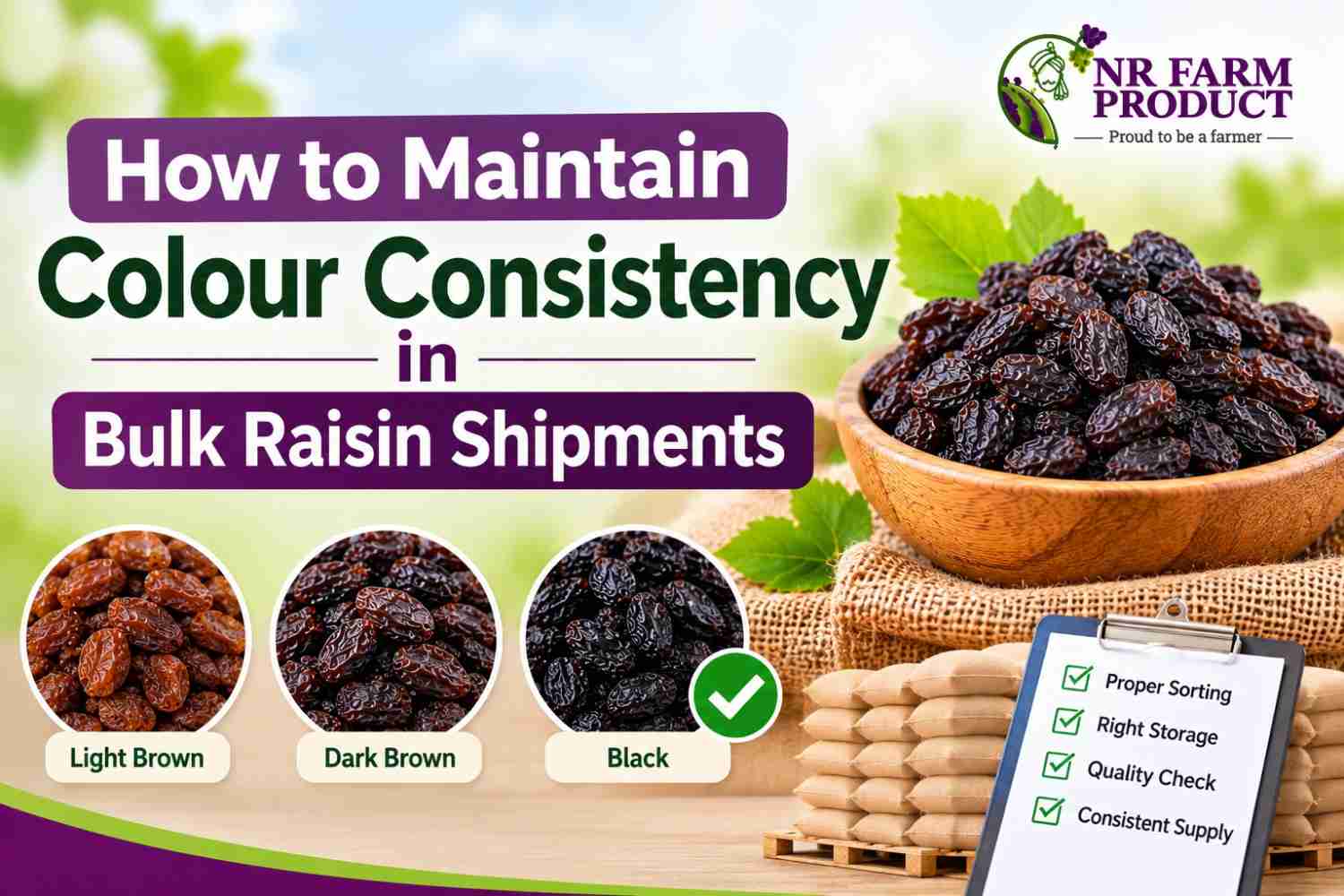
Even raisins of the same variety can have different shades. This can come from harvest conditions, drying methods, moisture levels, processing, or storage. Maintaining colour consistency in bulk raisin shipments requires clear product specifications, careful grading and proper quality checks throughout the supply chain.
Colour consistency is an important quality requirement when purchasing raisins in bulk. For food manufacturers, bakery businesses, retail brands and international distributors, variations in raisin colour can affect product appearance, customer expectations and brand standards.
For importers sourcing raisins from India to markets such as Vietnam, Senegal, Nigeria, Ghana, Ethiopia, Kenya and the UAE, working with an experienced raisins supplier can help reduce unwanted variations between shipments.
Select Raisins from Consistent Varieties and Grades
The first step towards maintaining colour consistency is selecting raisins with similar characteristics. Different varieties naturally produce different shades, textures and sizes.
For example, brown, black, golden and green raisins have distinct colour profiles. Even within one variety, differences in maturity and growing conditions can affect the final appearance.
Bulk buyers should specify the required raisin variety, colour range, size and grade before placing an order. Raisin manufacturers and exporters should follow these specifications when sourcing and preparing products.
Understand How Drying Methods Affect Raisin Colour
The raisin-making process and drying methods play an important role in the final colour of raisins.
Sun-dried raisins develop their colour through natural drying and exposure to environmental conditions. Differences in sunlight, temperature, humidity and drying duration can influence the final shade.
Other processing methods may produce different colour characteristics. For instance, sulphur treatment is sometimes used to preserve a lighter appearance in certain raisin products.
Buyers should communicate their preferred colour profile and processing requirements clearly. This is particularly important for food manufacturers producing bakery fillings, cereals, snack mixes and packaged dried-fruit products.
Establish Clear Colour Specifications Before Ordering
One common sourcing problem occurs when buyers and suppliers have different expectations about acceptable colour variation.
Instead of relying on descriptions such as "dark brown" or "uniform colour" alone, set measurable, visual quality requirements.
Consider the following checks:
- Colour range: Define the acceptable shade and variation.
- Product grade: Specify the required variety and size.
- Foreign matter: Set acceptable limits for unwanted materials.
- Moisture level: Agree on the required moisture specification.
- Sample approval: Approve a representative sample before bulk production or dispatch.
For repeat orders, retain an approved reference sample and use the same specifications for future shipments.
Maintain Proper Storage and Packaging Conditions
Proper storage of raisins for long-term storage can affect raisin colour and overall quality. Exposure to excessive moisture, heat, air and unsuitable storage conditions may affect appearance, texture and shelf life.
Industrial raisins should be stored in clean, dry conditions with suitable temperature and humidity management. Packaging should provide appropriate protection during handling, transportation and storage.
For international bulk raisin shipments, buyers should also consider the expected transit duration and destination climate. Shipments going to warmer or more humid markets, like parts of West Africa and Southeast Asia, need careful planning. Proper raisin packaging options are important. Proper storage is also important.
Conduct Quality Checks Before Dispatch
A reliable quality inspection process helps identify colour differences before products leave the processing facility.
Raisin manufacturers and exporters should check samples from different batches rather than relying on a single visual inspection. Where practical, standardised lighting and approved colour references can help make visual comparisons more consistent.
Bulk distributors and importers can request:
- Pre-dispatch product samples.
- Batch-wise quality inspection reports.
- Product specifications and moisture details.
- Relevant food safety standards and laboratory reports.
- Photographs or inspection records of the packed product.
These checks help buyers assess whether the shipment matches the agreed requirements.
Choose a Raisin Supplier with Consistent Quality Control
Choosing the right supplier is essential for maintaining colour consistency across repeat orders. Buyers should evaluate the supplier's sourcing practices, grading facilities, processing capabilities, packaging and quality control procedures.
For businesses sourcing organic raisins, certification and traceability should also be checked separately. Organic status does not automatically guarantee uniform colour.
Food manufacturers should select industrial raisins according to their application. Bakery businesses may prioritise size and texture, while retail brands may place greater importance on visual uniformity and packaging presentation.
For buyers looking for the best quality raisins supplier in India, comparing approved samples, specifications and batch consistency is more useful than relying only on supplier claims.
Why Colour Consistency Matters to Food Industries
The best types of raisins for bakery and food industries extend beyond natural sweetness and flavour. Their colour, texture and size contribute to the appearance and consistency of finished products.
Uniform raisins can help manufacturers maintain the expected appearance of:
- Bread, cakes, cookies and bakery fillings.
- Breakfast cereals, granola and muesli.
- Snack bars and fruit-and-nut mixes.
- Confectionery and packaged dried-fruit products.
- Retail and private-label food products.
Consistent raw materials make it easier for businesses to maintain product specifications across production batches.
Source Bulk Raisins from NR Farm Product
NR Farm Product, based in Nashik, Maharashtra, India, supplies raisins for B2B requirements, including food manufacturers, wholesalers, distributors and international buyers.
Businesses sourcing bulk raisins can discuss their preferred varieties, colour requirements, product grades and packaging specifications with our team. Buyers supplying markets such as Vietnam, Senegal, Nigeria, Ghana, Ethiopia, Kenya and the UAE can enquire about suitable products and export supply options.
Conclusion
Maintaining colour consistency in bulk raisin shipments requires attention to variety selection, drying methods, product grading, storage, packaging and quality inspections. Buyers should establish clear specifications and approve samples before confirming large orders.
For food manufacturers, bulk distributors and retail brands, working with a reliable raisins supplier helps reduce unwanted variations and maintain consistent product presentation across shipments.
If you are looking for bulk raisins for your food manufacturing business, contact us to discuss your sourcing requirements and get a quotation.
FAQs
1. Why do raisins from the same variety have different colours?
Colour variations can occur because of differences in grape maturity, drying duration, sunlight exposure, processing methods and storage conditions. Even raisins from the same variety may not have identical shades.
2. Does sun drying affect the colour of raisins?
Yes. Sunlight, temperature and drying duration influence the final colour. Naturally sun-dried raisins can develop darker brown shades, while certain processing methods can help retain lighter golden colours.
3. Why do raisins develop a white coating during storage?
A white crystalline coating can be caused by natural sugar crystallisation, often called sugar bloom. However, buyers should distinguish dry sugar crystals from mould, which may appear fuzzy and can be associated with an unpleasant smell.
4. Does storage temperature affect raisin colour?
Yes. Exposure to excessive heat and unsuitable storage conditions can contribute to discolouration, hardening and other quality changes. Raisins should be kept in appropriate storage conditions, away from direct heat and moisture.
5. Does darker colour mean better-quality raisins?
No. A darker shade does not automatically indicate better quality. Buyers should assess colour against the expected variety and grade, along with size, texture, moisture, cleanliness and the presence of defects.