
Fresh Dates vs Dried Dates: Which One Is Better for Health, Taste, and Storage?
Did you know the same date fruit can taste completely different depending on how it is processed?
When comparing Fresh Dates vs Dried Dates, many people wonder which one is healthier, sweeter, and better for storage. Fresh dates are soft, juicy, and naturally refreshing, while dried dates are chewy, sweeter, and packed with concentrated energy.
However, differences in moisture content, shelf life, taste, and nutritional value make each suitable for different uses. Whether you are a health-conscious consumer, dry fruit seller, or food business owner, understanding the difference between fresh and dried dates can help you choose the right option for daily consumption and storage needs.
What Are Fresh Dates?
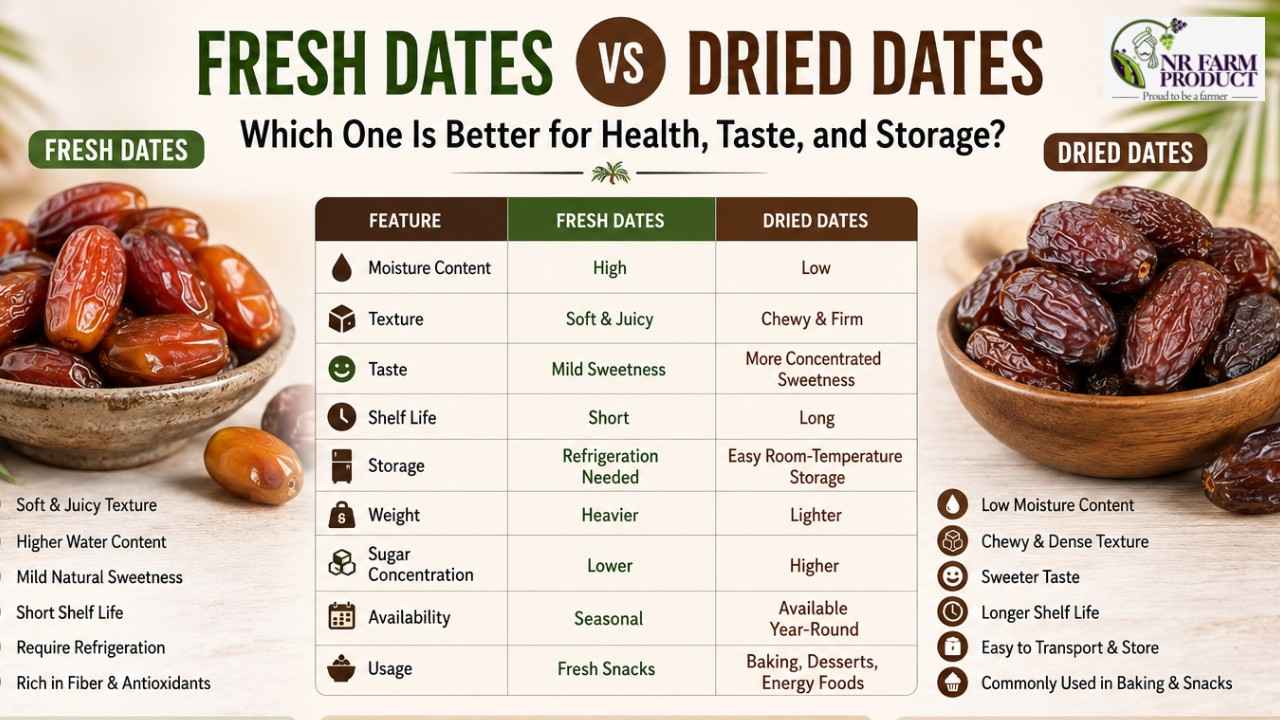
Fresh dates are naturally harvested fruits from the date palm tree that contain high moisture content and a soft texture. They are collected before the complete drying process, which makes them juicy, tender, and mildly sweet compared to dried dates.
Features of Fresh Dates
- Soft and juicy texture
- Higher water content
- Mild natural sweetness
- Short shelf life
- Require refrigeration
- Rich in fiber and antioxidants
Fresh dates are commonly consumed as a natural snack and are popular in Middle Eastern and Asian countries.
What Are Dried Dates?
Dried dates are fresh dates that have gone through a natural or controlled drying process to remove moisture. This process increases shelf life and makes the dates sweeter and chewier.
Features of Dried Dates
- Low moisture content
- Chewy and dense texture
- Sweeter taste
- Longer shelf life
- Easy to transport and store
- Commonly used in baking and snacks
Dried dates are widely exported around the world because they are easy to store and suitable for bulk supply.
Fresh Dates vs Dried Dates: Main Differences
Although fresh dates and dried dates come from the same fruit, they differ in many ways because of moisture content, storage methods, texture, and sweetness levels.
|
|
|
|
|
|
|
|
|
|
|
|
|
|
|
|
|
|
|
|
|
|
|
|
|
|
|
|
|
|
|
|
|
|
|
|
|
|
|
|
Nutritional Comparison of Fresh Dates vs Dried Dates
Both fresh and dried dates contain important nutrients such as fiber, vitamins, minerals, and antioxidants. However, drying changes the concentration of some nutrients.
|
|
|
|
|
|
|
|
|
|
|
|
|
|
|
|
|
|
|
|
|
|
|
|
|
|
|
|
|
|
|
|
Key Nutritional Benefits
Fresh dates are lighter and more hydrating, while dried dates offer concentrated energy and longer storage benefits. Choosing between them depends on dietary needs, lifestyle, and usage preferences.
Benefits of Fresh Dates
Hydrating Due to Higher Water Content
Fresh dates contain more natural moisture, which helps keep the body hydrated. Their juicy texture makes them refreshing, especially during warm weather.
Lower Calorie Density
Fresh dates have higher water content, they generally contain fewer calories per piece compared to dried dates. This makes them a suitable option for people looking for lighter snacks.
Easier to Digest for Some People
The soft texture and moisture in fresh dates may make them easier to digest for certain individuals, especially those who prefer less concentrated sweetness.
Refreshing Natural Taste
Fresh dates offer a mild, fruity sweetness and a soft bite that many people enjoy as a natural snack without additional processing.
Benefits of Dried Dates
High Energy Source
Dried dates are rich in concentrated natural sugars such as glucose and fructose, making them an excellent quick energy food for active individuals and athletes.
Rich in Natural Sugars
The drying process increases sweetness naturally without adding refined sugar. This makes dried dates a healthier alternative to processed sugary snacks.
Convenient for Travel and Storage
Dried dates are easy to carry, store, and transport because they do not spoil quickly. They are ideal for travel snacks and bulk packaging.
Better for Long-Term Use
Due to their low moisture content, dried dates have a longer shelf life and can be stored for months when kept in proper conditions.
Must Read: https://nrfarmproduct.com/blog/dates-and-raisins
Which Is Healthier: Fresh Dates or Dried Dates?
The answer depends on your health goals and eating habits.
Fresh Dates Are Better For:
- Low-calorie diets
- Hydration support
- Light snacking
- Fresh fruit lovers
Dried Dates Are Better For:
- Quick energy
- Athletes and active lifestyles
- Long storage needs
- Baking and cooking
When discussing Fresh Dates vs Dried Dates, neither option is unhealthy when consumed in moderation. Both offer natural nutrients and are healthier than processed sugary snacks.
Shelf Life and Storage Comparison
Storage plays an important role for wholesalers, retailers, and exporters.
|
|
|
|
|
|
|
|
|
|
|
|
|
|
|
|
|
|
|
|
Dried dates are more suitable for bulk trading and international export because they are less likely to spoil during transportation.
Uses of Fresh Dates vs Dried Dates
Both types of dates are widely used in different foods and recipes.
Uses of Fresh Dates
- Healthy snacks
- Smoothies
- Fruit salads
- Natural desserts
Uses of Dried Dates
- Energy bars
- Bakery products
- Sweets and confectionery
- Dry fruit mixes
- Traditional recipes
Dried dates are also commonly mixed with raisins, almonds, cashews, and pistachios in premium dry fruit products.
Which Dates Are Better for Diabetes?
People with diabetes should consume both fresh and dried dates carefully and in moderation.
- Fresh dates generally contain lower sugar concentration per piece.
- Dried dates have concentrated natural sugars.
- Fiber in dates may help slow sugar absorption.
- Pairing dates with nuts can help balance blood sugar response.
It is always best to consult a healthcare professional for dietary guidance.
Why Dry Fruits and Raisins Are Popular Healthy Snacks
Along with dates, raisins are also widely consumed for natural sweetness and nutritional benefits. Premium raisins are commonly included in healthy snack mixes and food products.
Benefits of raisins include:
- Natural energy source
- Rich in iron and fiber
- Easy to store
- Suitable for desserts and snacks
Businesses looking for quality dry fruits often prefer trusted suppliers like NR Farm Products for bulk dry fruit requirements.
Explore: https://nrfarmproduct.com/blog/health-benefits-of-raisins
Conclusion
The comparison of Fresh Dates vs Dried Dates mainly comes down to moisture content, sweetness, storage life, and usage. Fresh dates are soft, juicy, and lighter in calories, while dried dates are sweeter, energy-rich, and easier to store for longer periods.
Both fresh and dried dates offer health benefits when consumed in moderation. They are natural alternatives to processed sugary snacks and are widely used in homes, bakeries, and food industries worldwide.
For businesses and consumers looking for premium-quality dry fruits and raisins, NR Farm Products offers reliable dry fruit solutions with a focus on quality and freshness.
Frequently Asked Questions
1. Which is better, fresh dates or dried dates?
Ans: Fresh dates are lighter and hydrating, while dried dates provide more energy, sweetness, and longer storage for everyday convenient consumption and travel.
2. Do dates reduce inflammation?
Ans: Dates contain antioxidants and natural compounds that may help reduce inflammation and support overall health when eaten regularly in moderation by adults.
3. Can a diabetic patient eat dates?
Ans: Diabetic patients can eat dates moderately because fiber helps slow sugar absorption, but portion control and medical advice remain important for safety.
4. When to avoid eating dates?
Ans: Avoid eating dates excessively during strict low-sugar diets, digestive discomfort, or when advised by doctors because of concentrated natural sugars involved regularly.
5. Who should not eat dried dates?
Ans: People with uncontrolled diabetes, digestive problems, or dried fruit allergies should consume dried dates carefully and only in small amounts when necessary.
Must Read: https://nrfarmproduct.com/blog/yellow-dry-dates