
Health Benefits of Raisins: Nutrition, Benefits & Daily Intake
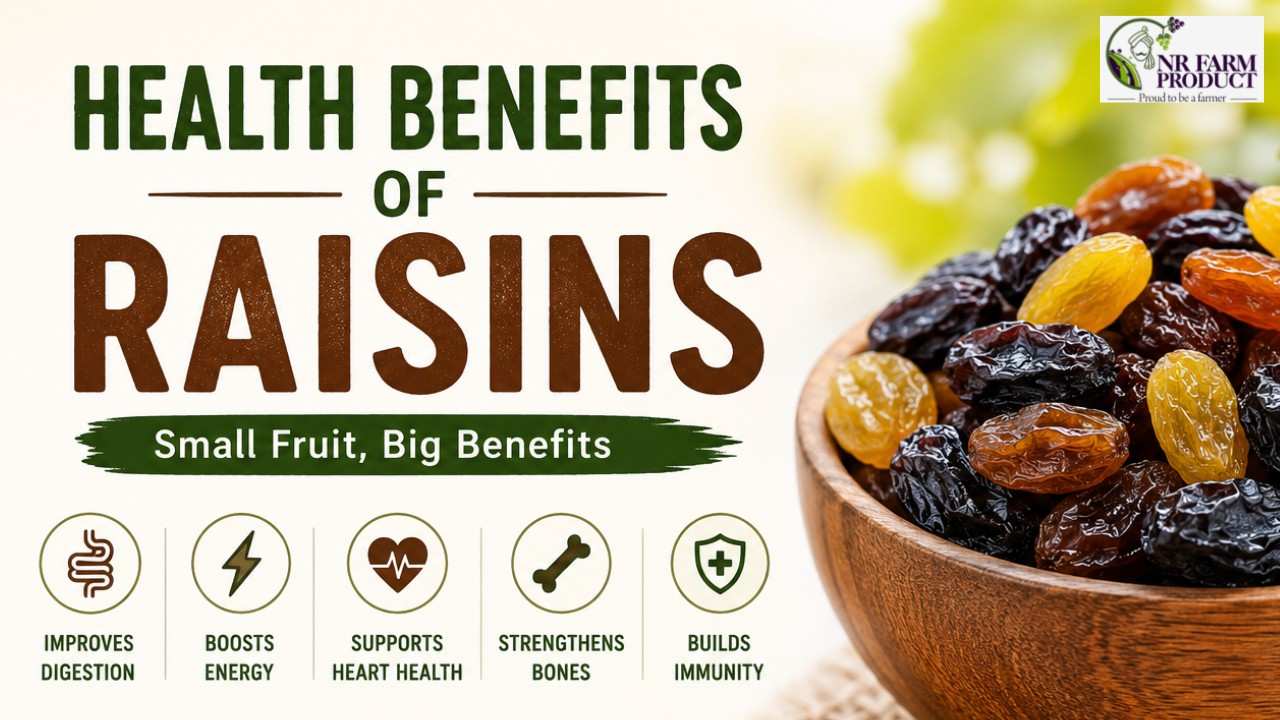
Raisins are dried grapes that pack natural sweetness, fibre and essential minerals into a small serving. They are easy to add to breakfast, snacks, desserts and everyday meals.
The health benefits of raisins come mainly from their fibre, potassium, iron, calcium and naturally occurring plant compounds. They can be a useful part of a balanced eating pattern when enjoyed in moderate amounts.
This guide covers raisin nutrition, key benefits, black and golden varieties, soaked raisins, and how much you can eat in a day.
Raisins Nutrition: What Do They Provide?
Fresh grapes lose most of their water during drying, which makes raisins more concentrated than fresh fruit. They provide carbohydrates along with several minerals and dietary fibre.
|
|
|
|
|
|
|
|
|
|
|
|
|
|
|
|
|
|
|
|
|
The exact nutritional profile depends on the grape variety and processing method. Black, brown, golden, green and seedless varieties can differ in taste, texture and appearance.
5 Key Benefits of Eating Raisins
Raisins provide fibre, iron, potassium, calcium, and antioxidants that support digestion, energy, heart health, and strong bones. They are also a convenient source of natural sugars and minerals.
Here are 5 benefits of eating raisins regularly:
1. Helps Maintain Healthy Digestion
Raisins contain dietary fibre, which plays a role in normal bowel function.
A small serving can be added to oats, porridge, yoghurt or breakfast cereals. Adequate water and a varied diet are also important for digestive health.
2. Provides a Quick Source of Energy
Raisins contain naturally occurring sugars, including glucose and fructose. These carbohydrates make them a convenient snack when you need energy between meals or during a busy day.
They also provide fibre and minerals, unlike many highly processed sweet snacks. Since drying removes water, however, it is easy to eat more than intended.
3. Adds Potassium to Your Diet
Potassium is involved in normal muscle and nerve function and helps maintain fluid balance.
Including raisins alongside other potassium-containing foods can contribute to your overall intake. They should be viewed as one part of a varied diet rather than a single source of this mineral.
4. Contributes to Bone-Friendly Nutrition
Raisins contain calcium and other minerals that form part of a varied diet for maintaining normal bones.
For stronger bones, it is important to eat a range of foods rather than relying on dried fruit alone. Calcium-rich foods, vitamin D sources and regular physical activity also have an important role.
5. Helps Increase Dietary Iron Intake
Iron is required for normal red blood cell formation and oxygen transport.
Raisins contain a small amount of iron and can contribute to daily intake. However, they should not be treated as a remedy for iron deficiency or anaemia. Anyone with a diagnosed deficiency should follow advice from a qualified healthcare professional.
Black Raisins vs Golden Raisins
Black raisins and golden raisins are both dried grapes, but their variety, processing, colour, flavour and texture can differ.
|
|
|
|
|
|
|
|
|
|
|
|
|
|
|
|
|
|
|
|
Neither variety needs to be considered universally better. Your choice can depend on taste, texture, intended use and processing method.
If you are comparing varieties for a particular purpose, factors such as size, moisture, cleanliness and storage are also worth checking.
Are Soaked Raisins Better?
Soaked raisins are simply dried grapes that have been softened in water before eating.
The softer texture can make them easier to chew, which is one reason some people prefer them in the morning. Soaking does not turn them into a special treatment or automatically increase their nutritional value.
If you enjoy soaked raisins, they can be included as one option within a balanced breakfast or snack.
How Many Raisins Should You Eat Per Day?
For many healthy adults, around 20–30 grams can be a practical serving. The actual number will vary because raisins differ in size.
There is no single amount that suits everyone. Your age, activity level, overall food intake and individual dietary needs can affect the appropriate portion.
Raisins are dried fruit, so their natural sugars and calories are more concentrated than in fresh grapes. A small handful is generally more practical than eating large quantities at once.
Can You Eat Raisins Every Day?
Yes. Raisins can be included regularly as part of a varied diet.
The key is portion size. A moderate serving can add fibre and minerals to meals, while frequent large portions can contribute more calories and carbohydrates than you may expect.
People following a diet for a specific medical condition should consider their individual dietary requirements before making raisins a regular part of their meals.
Simple Ways to Add Raisins to Your Meals
You do not need a special recipe to include them. Try adding a small portion to:
- Oats or porridge
- Breakfast cereals
- Yoghurt
- Homemade trail mixes
- Rice dishes
- Baked foods
- Traditional sweets and desserts
They can also be eaten on their own as a convenient snack.
How to Choose Good-Quality Raisins
The quality of dried grapes can vary according to the variety, drying process, sorting, storage and packaging.
For everyday use, check the product information, cleanliness, appearance, packaging and storage conditions. For commercial buyers, specifications such as size, moisture level, processing and packaging become more important.
NR Farm Product supplies varieties including black, golden, brown, Malayar and Sonaka raisins for different food applications.
Final Takeaway
The health benefits of raisins are linked to their fibre, natural carbohydrates and minerals such as potassium, iron and calcium. They can fit easily into breakfast foods, snacks and many traditional or baked recipes.
Black and golden varieties offer different tastes and textures, while soaked raisins are simply a softer way to enjoy the fruit. The most important consideration is portion size because dried fruit is more concentrated than fresh grapes.
Choose the variety that suits your needs and enjoy it as part of a balanced, varied diet.
FAQs
1. When to avoid raisins?
Diabetics who need to regulate sugar intake and people with a history of kidney stones should avoid raisins because of their high natural sugar and oxalate content.
2. What are the disadvantages of eating raisins?
Eating too many raisins can cause weight gain because of their natural sugar content. They can also cause stomach problems if eaten in excess.
3. Are kishmish and raisins the same?
Yes, 'kishmish' is another term for raisins, which are usually small, seedless, and naturally dried grapes.
4. Is raisin healthy for females?
Yes, raisins are healthy for women. They contain iron, calcium, and antioxidants that help in improving energy, bone strength, and immunity.
5. Which is healthier, blueberries or raisins?
Both are healthy. Blueberries are lower in sugar and higher in antioxidants, while raisins are higher in fiber, iron, and natural sugars that give energy.